


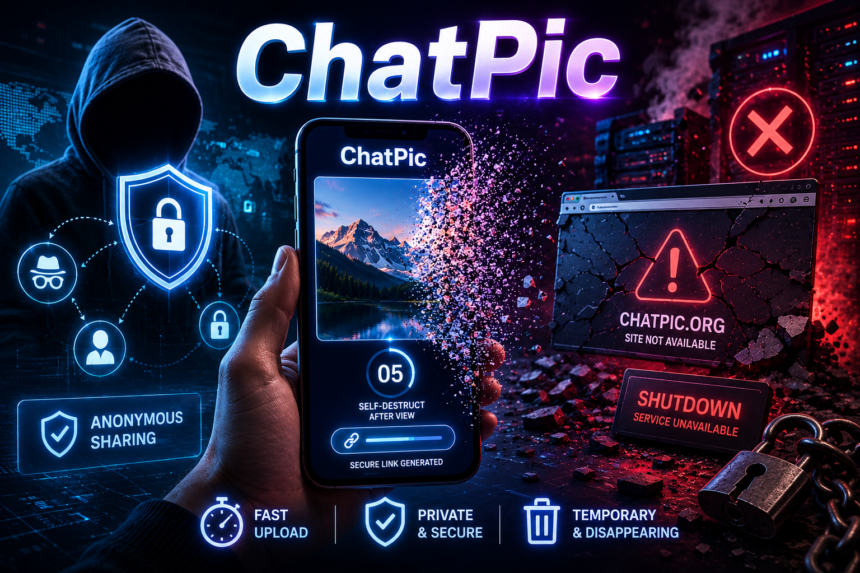
ChatPic was once one of those simple internet tools that people used without thinking too much. You opened it, uploaded an image, copied a link, and sent it anywhere you wanted. No signup, no email, no profile, nothing. It felt quick, light, and almost effortless.
- What Is ChatPic and Why People Used It
- How ChatPic Actually Worked Behind the Scenes
- Why ChatPic Became So Popular Online
- ChatPic.org Down: What Actually Happened
- Legal Pressure and Content Problems
- Regional Blocking and Access Issues
- Hosting and Domain Instability
- Privacy and Security Concerns
- ChatPic Shutdown Timeline and Decline
- Is ChatPic Safe to Use Today?
- ChatPic Telegram Groups and Fake Mirrors
- Best Alternatives to ChatPic for Safe Image Sharing
- What ChatPic Teaches Us About Online Platforms
Over time, it became especially popular in online communities where people needed fast image sharing without leaving a digital footprint. But the same simplicity that made ChatPic popular also created serious problems that eventually led to its downfall. Today, people still search for it, but the platform no longer works the way it used to, and in many cases, it is completely inaccessible.
In this article, we’ll go deep into what ChatPic actually was, how it worked, why it became so widely used, and what caused its shutdown. We’ll also look at what users learned from it and what safer alternatives exist today.
What Is ChatPic and Why People Used It
ChatPic was an anonymous image-sharing platform designed for one simple purpose: upload a photo and get a shareable link instantly. It did not ask for registration, login, or even basic identity details. That alone made it different from most platforms available at the time.
People used ChatPic mainly because it removed all friction. If someone wanted to share a screenshot, an image from their device, or even a quick visual reference, they didn’t need to go through any setup process. It was just upload and share.
Another reason it became popular was its temporary nature. Images could disappear after a certain time or after a number of views depending on how the system handled them. This gave users a feeling of privacy and control, even if they didn’t fully understand how the backend worked.
ChatPic also found its way into Telegram groups, Reddit discussions, and private online communities where users needed quick and disposable image hosting. In those spaces, speed mattered more than long-term storage, and ChatPic fit that need perfectly.
How ChatPic Actually Worked Behind the Scenes
Even though ChatPic felt simple on the surface, it worked through a basic image hosting system. When a user uploaded an image, the file was stored on a server and assigned a unique link. That link acted as the key to access the image.
The process was almost instant. You opened the site, selected your image, and within seconds you received a URL that you could share anywhere. There was no dashboard, no gallery, and no user profile attached to it.
What made ChatPic different was what it did not have. There was no strong moderation system, no identity verification, and very limited control over what users uploaded. Everything was built around the idea of zero friction.
This approach made the platform extremely fast, but it also meant that the system had very little protection against misuse. Once something was uploaded, it stayed accessible through the link unless manually removed or taken down by external action.
Why ChatPic Became So Popular Online
ChatPic grew mainly through organic internet communities rather than traditional marketing. People discovered it in forums, chat groups, and social platforms where users constantly needed fast image sharing.
One of the biggest reasons for its popularity was how easily it replaced more complex tools. Instead of uploading images to social media or cloud storage, users could simply use ChatPic and move on immediately.
It also became a favorite for temporary sharing. For example, if someone wanted to show a quick screenshot during a conversation or share a file that didn’t need to stay online forever, ChatPic became the easiest option.
Another reason was anonymity. Many users preferred not to attach their identity to every image they shared online. ChatPic allowed them to stay completely anonymous, which added to its appeal.
However, this same anonymity later became one of the biggest reasons for its downfall.
ChatPic.org Down: What Actually Happened
ChatPic did not disappear overnight. Its shutdown happened gradually as legal pressure, technical issues, and safety concerns started building up over time.
At first, users noticed occasional downtime and unstable access. Later, the platform became harder to reach, and eventually many regions started blocking it completely. By the time users searched for it again, they often found error pages or broken links.
The downfall of ChatPic was not caused by a single event. It was a combination of multiple serious issues that kept growing until the platform could no longer operate normally.
Legal Pressure and Content Problems
One of the biggest issues ChatPic faced was related to content moderation. Because the platform allowed anonymous uploads, it also became a place where harmful and non-consensual content could appear.
Reports from different regions highlighted concerns about illegal or inappropriate images being hosted on the platform. Since there was no strong moderation system in place, authorities began issuing takedown requests and legal warnings.
In many cases, platforms that host user-generated content must comply with strict data and privacy laws. ChatPic struggled with this responsibility, and over time, it became a legal risk for hosting providers.
Regional Blocking and Access Issues
As concerns grew, some countries and internet service providers started restricting access to ChatPic. Users in certain regions reported that the site would not load at all or would show blocked access messages.
This created a fragmented experience where some users could still access the platform while others could not. Over time, this inconsistency contributed to the platform’s decline.
When a service becomes unreliable across different regions, it loses trust, and that trust is extremely important for platforms that depend on global users.
Hosting and Domain Instability
Another major issue was related to hosting and domain management. ChatPic’s infrastructure began showing signs of instability as hosting providers faced pressure to disconnect services.
Eventually, parts of the system started going offline. Users noticed broken links, failed uploads, and long periods where the website simply would not respond.
At some point, there was no official announcement explaining what was happening, which made the situation even more confusing for users who still relied on the platform.
Privacy and Security Concerns
Even though ChatPic was marketed as anonymous, security researchers and users raised concerns about how safe it really was.
Uploaded images were not always protected with strong encryption, and in some cases, metadata such as location information could remain attached to files. This meant users were not as anonymous as they believed.
Another issue was the lack of deletion control. Once an image was uploaded, users had very little ability to remove it completely from the system.
These concerns played a major role in reducing trust in the platform and contributed to its eventual shutdown.
ChatPic Shutdown Timeline and Decline
ChatPic’s decline followed a slow but clear pattern. It started as a stable tool and gradually turned into an unreliable service.
In its early years, it functioned smoothly and gained a loyal user base. Over time, legal complaints started increasing, especially from regions concerned about privacy violations and harmful content.
Later, access restrictions began appearing, followed by server instability. Eventually, users could no longer depend on it for consistent image sharing.
By the time the platform became widely discussed online for being “down,” it was already in its final phase of decline.
Is ChatPic Safe to Use Today?
The short answer is no, and that applies to any version or mirror claiming to be ChatPic today.
The original platform no longer operates in a stable or official way, and many of the websites that appear under similar names are not connected to the original service at all.
These mirror sites are risky because they often lack proper security, moderation, and transparency. Some of them may even be designed to collect user data or display harmful content.
Because of this, experts generally advise avoiding any unofficial ChatPic links or copies.
ChatPic Telegram Groups and Fake Mirrors
After the platform started disappearing, unofficial groups and mirror websites began appearing online. Many of these claimed to restore ChatPic or offer archived versions of it.
However, most of these sources are not safe. They are often unregulated, and some may expose users to security risks or misleading content.
In many cases, these mirrors exist only to generate traffic or show aggressive advertisements. Some may even attempt to trick users into downloading files or sharing personal information.
The safest approach is simply to avoid them completely.
Best Alternatives to ChatPic for Safe Image Sharing
Even though ChatPic is gone, the need for quick image sharing still exists. Thankfully, several safer platforms now offer similar features with proper security and moderation.
Platforms like Imgur, PostImage, ImgBB, and Google Photos are commonly used today. These services allow users to upload and share images quickly, but with better privacy protection and stronger control systems.
Unlike ChatPic, these platforms also provide options for deletion, account management, and content moderation, which makes them more reliable in the long run.
If someone is looking for fast sharing without losing safety, these alternatives are a better choice.
What ChatPic Teaches Us About Online Platforms
The story of ChatPic is not just about one website shutting down. It is about how online platforms evolve and the challenges they face when balancing privacy, speed, and safety.
ChatPic succeeded because it was simple and fast. But it failed because it did not have enough protection or accountability systems in place.
This shows an important lesson about internet tools. Convenience alone is not enough to keep a platform alive. Without moderation, legal compliance, and user safety, even the most popular services can disappear quickly.
Conclusion
ChatPic started as a simple idea: fast and anonymous image sharing without any barriers. For a while, it worked perfectly and gained a strong user base across online communities.
But over time, the lack of safety controls, legal pressure, and security concerns led to its decline. Today, it stands as an example of how unregulated platforms struggle to survive in the long run.
While ChatPic is no longer reliable or accessible, its concept still lives on in modern platforms that try to balance speed with safety. The difference is that today’s alternatives are more structured, more secure, and better prepared for long-term use.
FAQs
What was ChatPic used for?
ChatPic was used for quickly uploading and sharing images through temporary links without needing an account.
Why did ChatPic shut down?
It faced legal pressure, content moderation issues, privacy concerns, and hosting problems that made it unstable and eventually unusable.
Is ChatPic still working?
No, the original platform is no longer reliably accessible, and most versions online are unofficial mirrors.
Are ChatPic mirror sites safe?
No, most mirror sites are unverified and may expose users to security risks or misleading content.
What are the best alternatives to ChatPic?
Safer alternatives include Imgur, PostImage, ImgBB, and Google Photos, which offer similar features with better security.