


Introduction to Nahttypen and Their Importance in Sewing
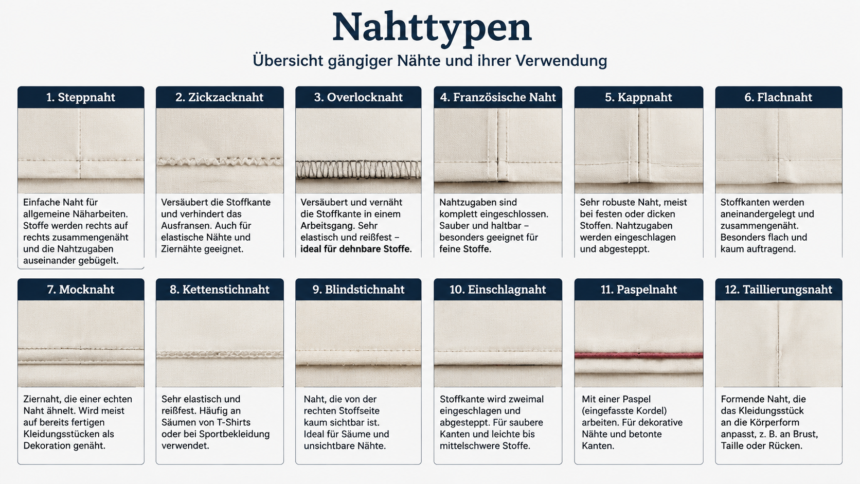
In the world of sewing and textile production, the term Nahttypen refers to different types of seams used to join fabric pieces together. While seams may appear to be a simple technical detail, they actually play one of the most important roles in determining the durability, appearance, comfort, and professional quality of any sewn product. Whether it is fashion clothing, sportswear, home textiles, or industrial fabric products, the choice of seam type can completely change how the final item performs and looks.
- Introduction to Nahttypen and Their Importance in Sewing
- The Role of Seam Types in Sewing Quality
- Simple Seam Construction and Its Everyday Use
- French Seam and Its Role in Elegant Garments
- Kappnaht and Its Strength in Heavy-Duty Applications
- Flatlock Seam and Its Use in Modern Sportswear
- Overlock and Edge Finishing Techniques
- Technical Classification of Seam Types
- Choosing the Right Nahttyp for Different Fabrics
- The Impact of Seam Types on Fashion Design
A seam is not just a line of stitching. It is a structural element that holds fabric under tension, allows movement, resists wear and tear, and in many cases defines the aesthetic identity of the garment. A poorly chosen seam can lead to discomfort, tearing, or an unprofessional finish, while a well-selected seam enhances strength, flexibility, and visual appeal.
Understanding Nahttypen is therefore essential not only for professional tailors and fashion designers but also for hobby sewists who want to improve the quality of their work. Different seam types are designed for different purposes, and each one has unique properties related to strength, elasticity, thickness, and appearance.
In modern textile engineering, seams are also standardized and classified to ensure consistent quality in mass production. This makes seam selection a technical decision as much as a creative one. When we understand how different seam types function, we gain control over both the technical performance and artistic outcome of sewing projects.
The Role of Seam Types in Sewing Quality
The quality of a sewn product depends heavily on how well its seams perform under real-life conditions. Clothing, for example, is constantly exposed to movement, stretching, washing, and environmental factors. Seams must be able to withstand these stresses without breaking or deforming.
One of the most important aspects of seam quality is strength. A strong seam ensures that fabric pieces remain securely joined even under pressure. This is especially important in areas like shoulders, waistlines, and side seams, where garments experience frequent movement.
Another key factor is flexibility. Some fabrics, such as jersey or stretch materials, require seams that can expand and contract without breaking. If a rigid seam is used on elastic fabric, it may snap or restrict movement. On the other hand, overly flexible seams on structured fabrics may reduce shape stability.
Comfort is also directly influenced by seam choice. Thick or rough seams can irritate the skin, especially in garments worn close to the body. This is why flat and smooth seams are preferred in underwear and sportswear.
Finally, aesthetics play a major role. Seam lines can be visible design elements or hidden structural components. High-end fashion often uses seams not only for construction but also as decorative features that enhance the visual identity of a garment.
 You might also like: Rosboxar
Simple Seam Construction and Its Everyday Use
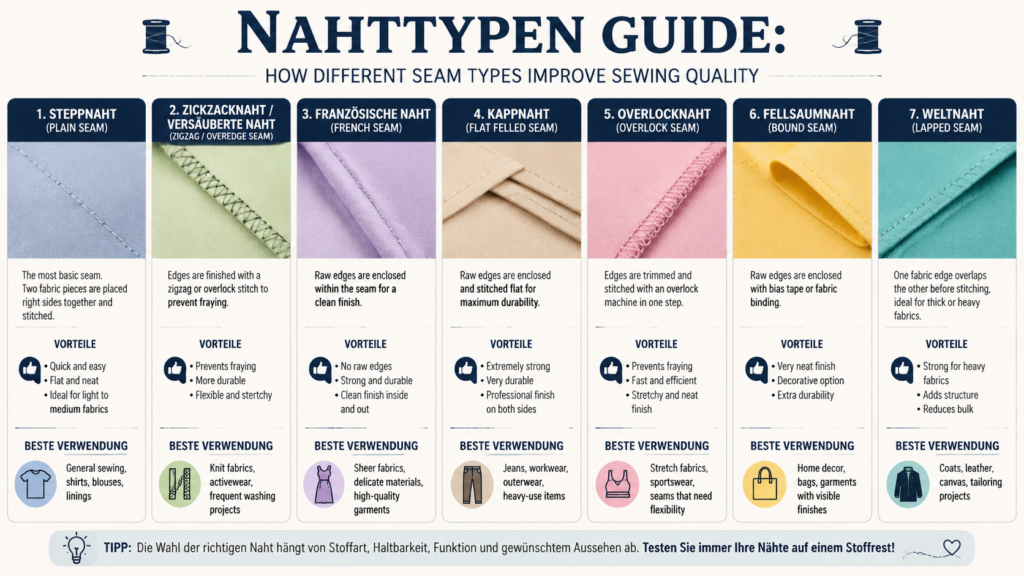
One of the most commonly used seam types in sewing is the simple seam, often referred to as a plain or closed seam. This seam is created by placing two pieces of fabric right sides together and stitching along the edge. After sewing, the seam allowance is typically pressed open or to one side.
The simplicity of this seam makes it extremely versatile. It is widely used in everyday garments such as shirts, dresses, and trousers. Its main advantage lies in its efficiency and ease of production. Because it requires minimal steps, it is ideal for mass production and beginner sewing projects.
However, the simple seam also has limitations. If not finished properly, the raw edges of the fabric can fray over time. To improve durability, seam finishing techniques such as overlocking or zigzag stitching are often applied. Despite its simplicity, this seam can still produce high-quality results when combined with proper finishing methods.
French Seam and Its Role in Elegant Garments
The French seam is known for its clean and refined appearance. Unlike a simple seam, this type encloses the raw edges of the fabric completely inside the seam structure. This makes it particularly suitable for delicate or lightweight fabrics such as chiffon, silk, and organza.
The construction of a French seam involves two stitching steps. First, the fabric is sewn with wrong sides together. Then, the seam is trimmed and folded so that the right sides are together, and a second seam is stitched to enclose the raw edges inside.
This technique produces a very neat and professional finish on both the inside and outside of the garment. It eliminates fraying and adds durability without increasing bulk significantly.
French seams are commonly used in high-quality blouses, lingerie, and luxury garments where appearance and comfort are equally important. Although slightly more time-consuming, the result is a seam that looks elegant and feels smooth against the skin.
📌You might also like: Pyjamaspapper
Kappnaht and Its Strength in Heavy-Duty Applications
The Kappnaht, also known as a flat-felled seam, is one of the strongest seam types in sewing. It is widely used in garments that require high durability, such as jeans, workwear, and outdoor clothing.
This seam is constructed by folding one fabric edge over the other and stitching it down twice, creating a double-stitched structure that locks the fabric securely in place. The raw edges are completely enclosed, which prevents fraying and increases longevity.
One of the most recognizable uses of this seam is in denim jeans, especially along the inner leg seams. The visible double stitching is not only functional but also a signature design element of denim fashion.
The main advantage of the Kappnaht is its exceptional strength. It can withstand repeated washing, heavy strain, and long-term use without weakening. However, it does create a thicker seam, which may not be suitable for lightweight fabrics or delicate garments.
Flatlock Seam and Its Use in Modern Sportswear
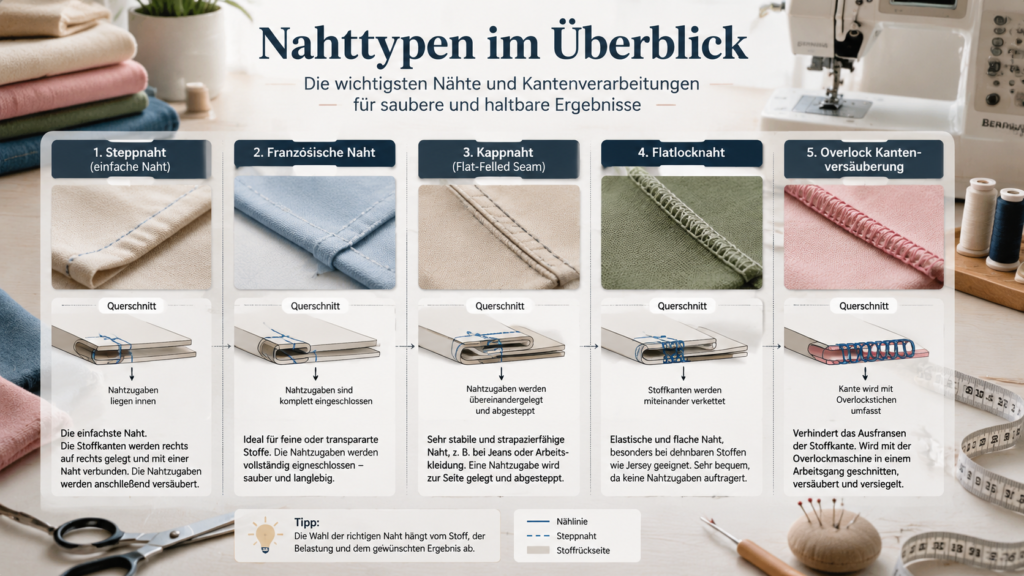
The flatlock seam is widely used in activewear, sports clothing, and functional garments where comfort and flexibility are essential. Unlike traditional seams where fabric layers overlap, flatlock seams join fabric edges side by side, creating a flat surface.
This structure reduces bulk and prevents friction against the skin, making it ideal for clothing worn during physical activity. It also allows for high elasticity, which is important in stretch fabrics used in sportswear.
Flatlock seams are commonly produced using specialized machines that interlock threads across fabric edges. The result is a seam that is both strong and flexible while remaining smooth and comfortable.
In modern fashion, flatlock seams are also used as decorative elements, with contrasting thread colors highlighting the seam lines as part of the garment design.
You might also like: tumbons
Overlock and Edge Finishing Techniques
In addition to structural seams, edge finishing plays a crucial role in sewing quality. The overlock seam is one of the most common methods used to prevent fabric edges from fraying.
This seam is created using an overlock machine, which trims the fabric edge while simultaneously wrapping it with thread. The result is a clean, secure edge that improves durability and appearance.
Overlock seams are especially important in knit fabrics and stretchy materials, where raw edges tend to unravel easily. They are widely used in both home sewing and industrial garment production.
While overlock seams are not always visible in finished garments, they significantly contribute to the overall quality and longevity of the product.
Technical Classification of Seam Types
In industrial textile production, seam types are not only categorized by appearance or function but also standardized using technical systems such as DIN EN ISO classifications. These systems define seam structures based on how fabrics are joined, the number of stitching lines, and the construction method.
This classification ensures consistency in large-scale manufacturing and allows designers and engineers to communicate precise technical specifications. Factors such as stitch density, thread type, seam width, and tension are all considered when defining seam quality.
Such standardization is especially important in industries like automotive textiles, protective clothing, and technical fabrics, where seam failure can have serious consequences.
Choosing the Right Nahttyp for Different Fabrics
Selecting the appropriate seam type depends heavily on the fabric being used. Lightweight fabrics require delicate seams that do not add bulk, while heavy fabrics need strong seams that can handle stress.
Elastic fabrics benefit from stretchable seams such as flatlock, while structured fabrics like denim require reinforced seams like Kappnaht. Decorative fabrics may prioritize aesthetic seam types such as French seams for a refined appearance.
Understanding fabric behavior is therefore essential when choosing seam types. A mismatch between fabric and seam can lead to poor performance, reduced comfort, or premature wear.
The Impact of Seam Types on Fashion Design
In fashion design, seams are not only functional but also artistic tools. Designers use seam placement, direction, and style to shape garments and create visual interest.
Seams can define body contours, create structure, or add decorative detail. For example, princess seams are often used to shape fitted dresses, while visible topstitching can add a modern, industrial look.
The choice of seam type directly influences the identity of a garment. A simple change in seam construction can transform a basic design into a high-fashion piece or a functional sports garment.
Conclusion
Nahttypen are far more than technical details in sewing. They are the foundation of garment construction, influencing strength, comfort, durability, and design. By understanding different seam types, sewists and designers gain the ability to control both the technical performance and aesthetic outcome of their work.
From simple seams to complex industrial constructions, each Nahttyp serves a specific purpose. The key to high-quality sewing lies in selecting the right seam for the right material and application. When this balance is achieved, the result is not only visually appealing but also durable and functional.
Mastering seam types is therefore one of the most important steps toward professional-level sewing quality.
FAQs
What does “Nahttypen” mean in sewing?
Nahttypen refers to different types of seams used in sewing to join fabric pieces together. Each seam type has a specific purpose depending on the fabric, durability needs, and final design.
Which seam type is the strongest?
The Kappnaht (flat-felled seam) is considered one of the strongest seam types. It is commonly used in jeans and workwear because it can withstand heavy stress and repeated washing.
What is the best seam for delicate fabrics?
The French seam is ideal for delicate fabrics like silk or chiffon. It encloses raw edges completely, preventing fraying and giving a clean, elegant finish.
Why are overlock seams important?
Overlock seams help prevent fabric edges from fraying and increase durability. They are widely used in both professional garment production and home sewing, especially for knit fabrics.
How do I choose the right seam type?
The right seam depends on the fabric type, garment purpose, and required strength or flexibility. Lightweight fabrics need fine seams, while heavy or stretch fabrics require stronger or more flexible seam constructions.