


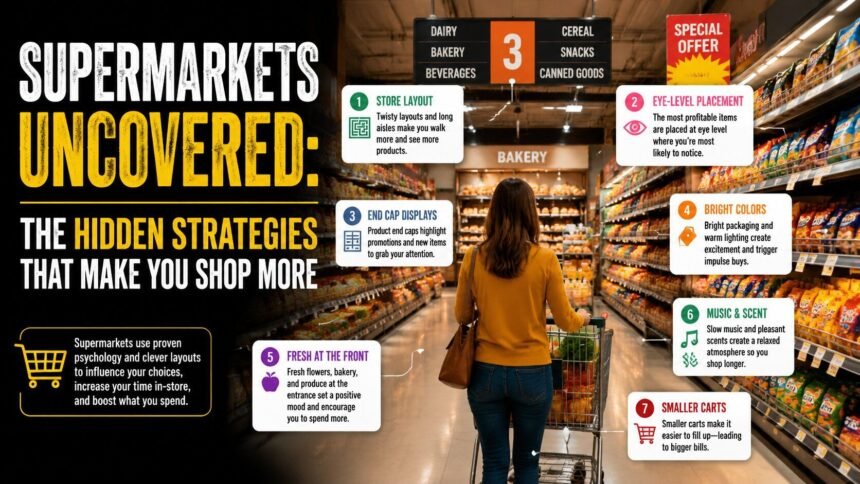
Supermarkets have become an essential part of modern life. Almost everyone visits them regularly, whether for daily groceries, household items, or occasional shopping. On the surface, a supermarket looks simple—a large store filled with food, drinks, and products neatly arranged on shelves. However, behind this simple appearance lies a highly advanced system designed carefully to influence how you shop, what you buy, and how much time and money you spend inside the store.
- The Journey Begins Before You Even Enter
- Store Layout and the Psychology of Movement
- Product Placement and Eye-Level Strategy
- Pricing Tricks That Influence Your Mind
- The Power of Sensory Experience
- Shopping Carts and Basket Psychology
- Impulse Buying and Strategic Product Zones
- Loyalty Programs and Customer Retention
- Technology and the Future of Supermarkets
Every detail in a supermarket, from the lighting and music to the placement of products on shelves, is planned with precision. Nothing is random. Retailers use psychology, data analysis, and consumer behavior studies to shape your shopping experience in a way that encourages you to buy more than you originally intended. This is not about forcing anyone to buy unnecessary things, but about creating an environment that naturally guides customer behavior.
Understanding these strategies can help you become a smarter shopper. Once you know how supermarkets operate behind the scenes, you can make more conscious decisions and avoid unnecessary purchases while still enjoying the convenience they offer.
The Journey Begins Before You Even Enter
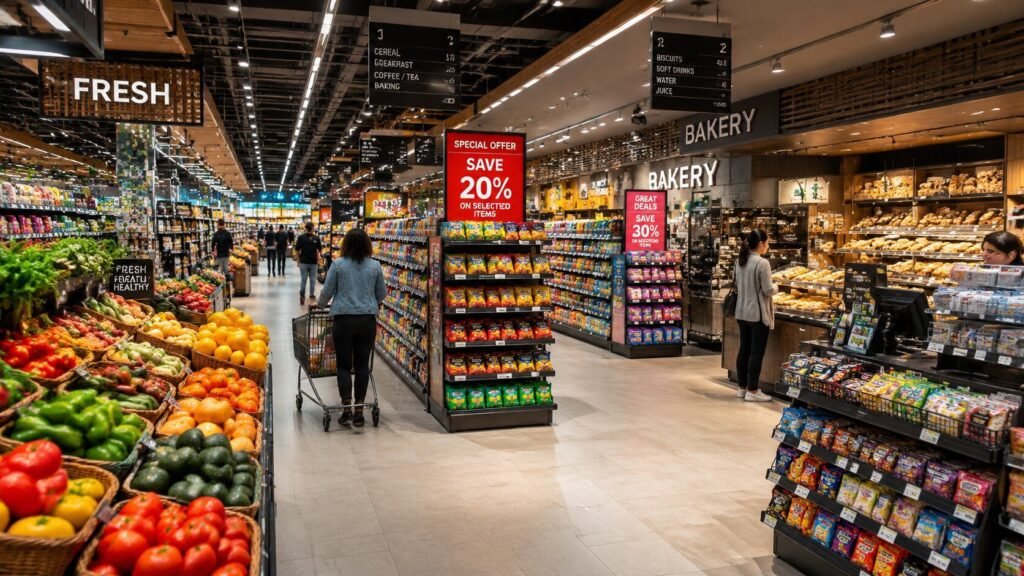
The influence of a supermarket starts long before you step inside the store. The exterior design, parking layout, and entrance placement are all carefully considered. Supermarkets are often located in busy areas or shopping centers where people naturally pass by multiple times. This repeated exposure increases familiarity, and familiarity builds trust.
Even the size of the parking lot plays a psychological role. A large, open parking space creates the impression that the store is popular and trustworthy. When customers see many cars parked outside, it signals that others are also shopping there, which increases confidence in the store’s quality.
Once you enter, the journey is designed to be smooth but subtly guiding. The entrance area is often bright, clean, and open, giving a welcoming feel. Fresh produce like fruits and vegetables is usually placed right at the entrance. This is not a coincidence. Fresh items create a strong positive impression and make the store feel healthy, fresh, and appealing. It also encourages you to start your shopping journey with visually attractive items, setting a positive mood.
Store Layout and the Psychology of Movement
One of the most powerful strategies supermarkets use is store layout design. Most supermarkets are structured so that customers move in a specific direction, often counterclockwise. This layout is based on studies of human movement and behavior patterns. Most people naturally turn right when entering a space, so supermarkets design their layout to guide customers in that direction.
This movement pattern ensures that customers pass through as many product sections as possible before reaching essential items like milk or bread, which are usually placed deeper inside the store. The longer the path, the more exposure customers have to different products, increasing the chances of impulse buying.
Wide aisles and open spaces are also intentional. They make the store feel comfortable and encourage slower movement. When people move slowly, they are more likely to notice products and make additional purchases. Narrow or crowded spaces would have the opposite effect and reduce buying behavior.
Product Placement and Eye-Level Strategy
Inside supermarkets, product placement is one of the most carefully planned elements. Items placed at eye level are the most likely to be noticed and purchased. This is why premium or high-profit products are often positioned at this height. Brands pay extra money to secure these positions because they understand the value of visibility.
Lower shelves often contain cheaper or store-brand products, while higher shelves may contain less frequently purchased items. Children’s products are often placed at lower levels where kids can easily see them, influencing their parents’ decisions.
Even the placement of essential items is strategic. Basic goods like milk, eggs, and bread are usually located at the back of the store. This forces customers to walk through multiple aisles before reaching them, increasing exposure to other products along the way. The more sections you pass, the higher the chance of adding extra items to your basket.
Pricing Tricks That Influence Your Mind
Pricing is another powerful tool used by supermarkets. Prices are often designed to appear lower than they actually are. For example, instead of rounding numbers to whole figures, stores use prices like 9.99 instead of 10. This small difference creates a psychological effect where the product feels significantly cheaper, even though the difference is minimal.
Discount labels also play a major role. Words like “offer,” “special price,” or “limited time deal” create urgency. Even if the discount is small, the idea of saving money encourages customers to buy quickly without much comparison.
Bundle offers are another common strategy. When multiple products are sold together at a slightly reduced price, customers feel like they are getting more value. However, in many cases, they end up buying more than they actually need.
Supermarkets also use pricing comparisons, placing expensive items next to slightly cheaper alternatives. This makes the cheaper option look like a better deal, even if it is still relatively expensive.
The Power of Sensory Experience
Supermarkets carefully design the sensory experience to influence emotions and behavior. Lighting plays a big role in this. Bright, white lighting is used in fresh food sections to make products look clean and appealing. Warmer lighting is used in bakery sections to create a feeling of comfort and freshness.
Music is another important factor. Slow, calming music encourages customers to move slowly, which increases the time spent inside the store. The longer customers stay, the more they are likely to buy. During busy hours, faster music may be used to increase movement and reduce congestion.
Even smells are carefully managed. The scent of fresh bread or baked goods is often intentionally circulated near entrances or bakery sections. This creates a strong emotional response and stimulates hunger, encouraging unplanned food purchases.
Shopping Carts and Basket Psychology
The design of shopping carts is another subtle but effective strategy. Modern shopping carts are larger than they used to be. This is not accidental. A larger cart creates a visual perception that it is not full, even when it already contains several items. This encourages customers to keep adding more products.
Smaller baskets, on the other hand, make customers more aware of space limitations. Supermarkets often provide both options, guiding customers toward carts for longer shopping sessions.
The weight and handling of carts are also designed for smooth movement, making it easier for customers to navigate the store without frustration.
Impulse Buying and Strategic Product Zones
Impulse buying is a major focus in supermarket design. Certain areas are specifically created to trigger spontaneous purchases. These include checkout lines, end-of-aisle displays, and promotional stands.
At checkout counters, you will often find snacks, chocolates, chewing gum, and small items. These are placed at eye level and within easy reach, targeting customers who are waiting and may be mentally tired from shopping.
End-of-aisle displays are also powerful. These areas catch attention because they interrupt the natural flow of aisles. Products placed here often include promotions or seasonal items, designed to attract quick decisions.
Even product grouping inside aisles is strategic. Complementary items are placed near each other, such as pasta and sauces or chips and drinks. This encourages customers to buy related items together, even if they originally planned to buy only one.
Loyalty Programs and Customer Retention
Modern supermarkets rely heavily on loyalty programs to keep customers returning. These programs offer points, discounts, or rewards based on purchase history. While they provide real benefits to customers, they also allow supermarkets to collect valuable data.
This data helps retailers understand shopping patterns, preferences, and habits. Based on this information, supermarkets can create personalized offers that are more likely to influence future purchases.
Email notifications, app-based discounts, and personalized coupons are all part of this system. The goal is not just to sell products, but to build long-term customer relationships.
Technology and the Future of Supermarkets
Technology is transforming supermarkets rapidly. Self-checkout machines, smart carts, and mobile payment systems are becoming more common. These innovations reduce waiting time and improve convenience, but they also increase efficiency for retailers.
Artificial intelligence is now being used to predict customer behavior and manage inventory. Smart systems can analyze which products are selling faster and adjust stock levels automatically.
In the future, supermarkets may become even more automated, with digital shelves, personalized shopping suggestions, and fully cashier-less experiences.
Conclusion
Supermarkets are far more complex than they appear. Every detail inside them is carefully designed to influence how customers behave. From layout and lighting to pricing and product placement, everything works together to create a smooth and engaging shopping experience.
Understanding these hidden strategies does not mean you should avoid supermarkets. Instead, it helps you become more aware of how your decisions are influenced. With this awareness, you can shop more mindfully, save money, and still enjoy the convenience that supermarkets provide.
Supermarkets will continue to evolve, but one thing will remain the same: they will always be designed to understand and respond to human behavior in the most effective way possible.
FAQs
Why do supermarkets place fresh fruits and vegetables at the entrance?
Supermarkets place fresh produce at the entrance to create a positive first impression. It makes the store feel fresh, healthy, and well-stocked, which encourages customers to feel comfortable and spend more time shopping inside.
How do supermarkets influence customers to buy more products?
Supermarkets use different strategies such as product placement, lighting, music, and store layout. These elements are designed to guide customer movement, increase product visibility, and encourage impulse buying without customers realizing it.
Why are essential items like milk and bread placed at the back of the store?
Essential items are placed at the back so customers must walk through multiple aisles to reach them. This increases exposure to other products, which raises the chances of additional purchases during the shopping trip.
Do supermarket discounts really help customers save money?
Some discounts offer real savings, but not all deals are as beneficial as they appear. Supermarkets often use pricing psychology, such as “limited-time offers” or bundle deals, which can encourage customers to spend more overall.
What is the purpose of loyalty programs in supermarkets?
Loyalty programs are designed to reward repeat customers while collecting data about shopping habits. This information helps supermarkets create personalized offers and encourages customers to return more frequently.