


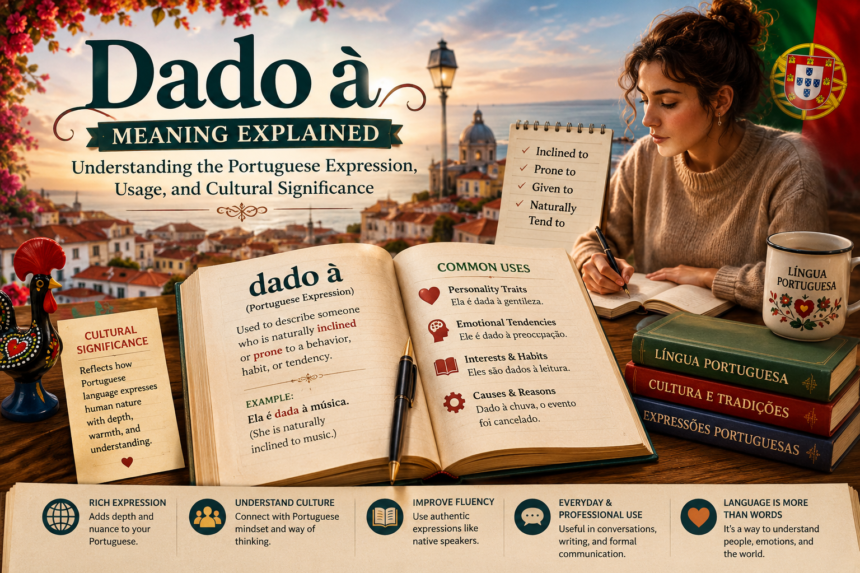
Language is more than just words. It reflects emotions, personality, culture, and the way people understand human behavior. Some expressions carry deeper meaning than their direct translation, and one of the best examples in Portuguese is the phrase “dado à.” This small expression may look simple at first, but it holds strong emotional and cultural value in Portuguese communication.
- What Does “Dado À” Mean?
- Literal Translation vs Real Meaning
- The Grammar Behind “Dado À”
- Why “Dado À” Is Important in Portuguese Culture
- Common Situations Where “Dado À” Is Used
- Emotional Meaning of “Dado À”
- “Dado À” Compared to English Expressions
- Examples of “Dado À” in Real Life
- Common Mistakes Language Learners Make
- The Historical Origin of “Dado À”
- Why Expressions Like “Dado À” Matter in Language Learning
- The Psychological Side of the Expression
- Modern Usage in Media and Communication
- How to Use “Dado À” Naturally
- Conclusion
- FAQs
- What does “dado à” mean in simple terms?
- Is “dado à” used in formal Portuguese?
- Can “dado à” describe positive and negative behaviors?
- Why is “dado à” difficult to translate directly into English?
- Is “dado à” still commonly used today?
- What is the difference between “dado à” and “devido a”?
- Can language learners use “dado à” naturally?
People often come across “dado à” while learning Portuguese, reading books, watching Portuguese media, or speaking with native speakers. Many learners understand the literal translation but still struggle to fully grasp its real meaning and usage. That happens because the phrase carries emotional and social nuance that cannot always be translated directly into English.
In Portuguese-speaking cultures, expressions like “dado à” are used to describe personality, habits, emotional tendencies, and natural behavior. It helps speakers explain why someone naturally acts a certain way. Instead of describing a temporary action, the phrase points toward a deeper tendency or characteristic that feels connected to a person’s nature.
Understanding “dado à” is important for language learners because it improves fluency and cultural understanding. It also helps people communicate more naturally and expressively. Once you learn how this expression works, you begin to understand how Portuguese speakers describe personality and behavior with warmth and emotional depth.
What Does “Dado À” Mean?
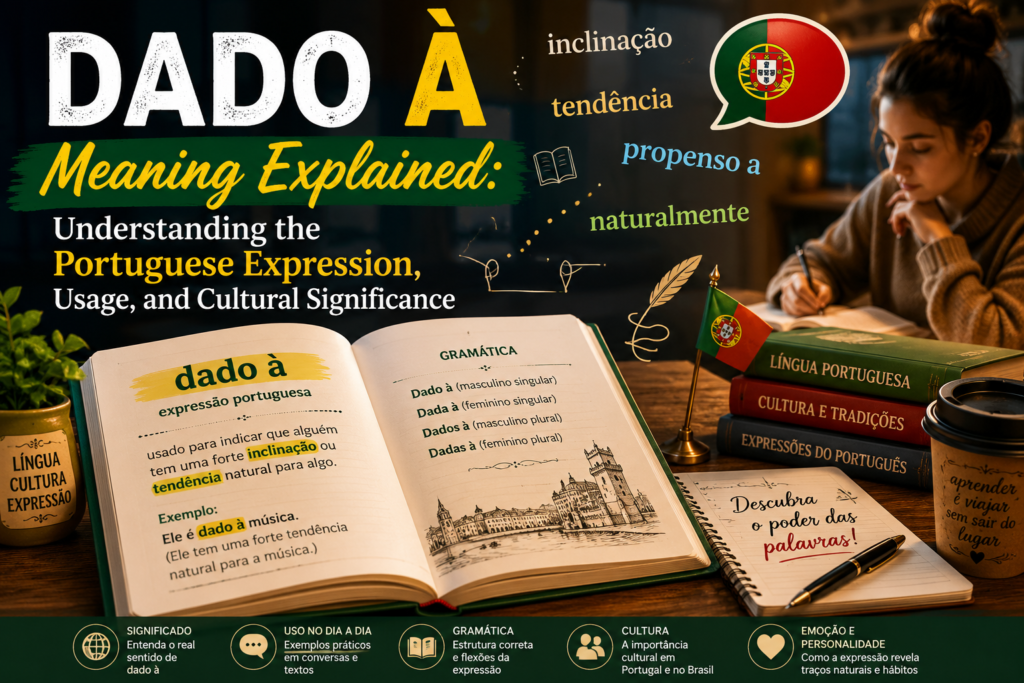
The expression “dado à” is commonly translated into English as “given to,” “prone to,” or “inclined toward.” However, these translations only explain part of its meaning. In Portuguese, the phrase often describes someone who naturally leans toward a certain habit, emotional tendency, interest, or behavior.
For example, if someone loves reading and spends most of their time with books, a Portuguese speaker might describe that person as “dado à leitura.” This means the person naturally enjoys reading and feels connected to it as part of their personality.
The expression is not only about actions. It also describes emotional and psychological tendencies. Someone can be “dado à ansiedade” if they naturally worry a lot, or “dado à criatividade” if they are naturally creative.
This makes the phrase powerful because it describes more than behavior. It describes internal inclination. It suggests that the tendency comes naturally rather than being forced or temporary.
 You might also like: Peitner
Literal Translation vs Real Meaning
Literally, “dado à” translates to “given to.” The phrase comes from the Portuguese verb “dar,” which means “to give.” Over time, the expression evolved into a descriptive phrase used to explain natural tendencies and behavior.
However, the real meaning depends heavily on context. In everyday conversation, native speakers do not think about the literal translation. Instead, they use the expression emotionally and socially to describe personality and behavioral patterns.
For example:
- “Ela é dada à música.”
- “He is naturally inclined toward music.”
This sentence does not simply mean she likes music. It suggests that music is part of her natural personality and emotional world.
That emotional layer is what makes the phrase difficult to translate directly into English. English equivalents often sound more neutral and less expressive.
The Grammar Behind “Dado À”
Although the expression may seem complicated at first, the grammar is actually simple once you understand the structure.
The phrase changes depending on gender and number:
- Dado à → masculine singular
- Dada à → feminine singular
- Dados à → masculine plural
- Dadas à → feminine plural
The expression works like an adjectival phrase that connects a subject to a behavior, habit, or tendency.
Examples:
- “Ele é dado à aventura.”
- “Ela é dada à arte.”
- “Eles são dados à reflexão.”
- “Elas são dadas à música.”
The form changes to match the subject. This grammatical flexibility helps Portuguese maintain natural sentence harmony while keeping communication expressive.
Why “Dado À” Is Important in Portuguese Culture
Portuguese culture values emotional expression and personality-based communication. Instead of describing people in cold or direct ways, the language often uses softer expressions that reflect understanding and emotional nuance.
“Dado à” fits perfectly into this communication style. It allows speakers to describe someone’s tendencies without sounding harsh or judgmental.
For example, saying someone is “dado à dramatização” does not necessarily criticize them. It gently suggests that the person naturally reacts dramatically. The phrase sounds softer and more human than directly labeling someone as dramatic.
This emotional softness is part of what makes Portuguese communication unique. Expressions like “dado à” help maintain warmth, social understanding, and emotional intelligence during conversation.
You might also like: Cesta Roman
Common Situations Where “Dado À” Is Used
The phrase appears in many areas of life and communication.
Everyday Conversations
In casual speech, people use the expression to describe personality and habits.
Examples include:
- Someone naturally interested in books
- A person who worries often
- Someone who loves art or music
- A person prone to emotional reactions
These descriptions help create a clearer picture of someone’s personality.
Literature and Storytelling
Portuguese literature frequently uses “dado à” when building characters. Writers use it to show personality without long explanations.
Instead of writing several paragraphs about a character’s emotional nature, a simple phrase like “dado à melancolia” can immediately communicate emotional depth.
Professional and Formal Communication
The expression can also appear in formal writing. In professional settings, it may describe tendencies, causes, or behavioral patterns in a sophisticated and clear way.
This flexibility allows the phrase to work in both emotional and professional communication.
Emotional Meaning of “Dado À”
One reason this phrase remains so popular is its emotional depth.
Many languages describe actions, but Portuguese often describes emotional tendencies behind actions. “Dado à” helps speakers explain the natural emotional direction of a person.
For example:
- “Dado à gentileza” suggests kindness feels natural to someone.
- “Dado à reflexão” suggests someone naturally thinks deeply.
- “Dado à ansiedade” suggests emotional worry is part of their behavior pattern.
These descriptions feel more understanding and less judgmental than direct labels.
The phrase recognizes that human behavior usually comes from deeper emotional tendencies rather than isolated actions.
“Dado À” Compared to English Expressions
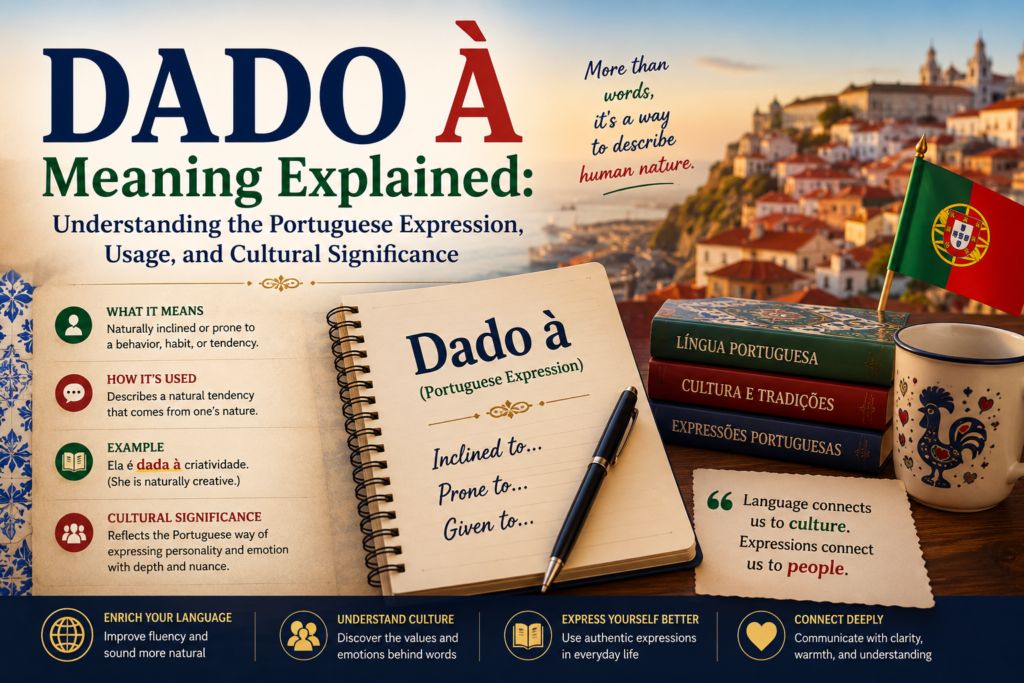
Several English expressions carry similar meanings:
- Given to
- Prone to
- Inclined toward
- Naturally drawn to
However, none fully capture the emotional tone of the Portuguese expression.
For example:
- “He is prone to anxiety” sounds clinical in English.
- “Ele é dado à ansiedade” feels softer and more emotionally aware in Portuguese.
English often focuses on behavior itself, while Portuguese focuses on the relationship between personality and behavior.
This difference shows how language reflects culture and emotional communication styles.
You might also like: Turaska
Examples of “Dado À” in Real Life
Understanding examples makes the phrase easier to use naturally.
Positive Examples
- “Ela é dada à criatividade.”
She is naturally creative. - “Ele é dado à generosidade.”
He is naturally generous. - “Eles são dados à leitura.”
They naturally enjoy reading.
Negative Examples
- “Ele é dado à preocupação.”
He tends to worry a lot. - “Ela é dada ao drama.”
She naturally reacts dramatically. - “Eles são dados à impulsividade.”
They are naturally impulsive.
The phrase itself is neutral. Whether the meaning feels positive or negative depends completely on context.
Common Mistakes Language Learners Make
Many learners struggle with this phrase at first. Some common mistakes include:
Gender Agreement Errors
People often forget to match the phrase with the subject.
Incorrect:
- “Ela é dado à arte.”
Correct:
- “Ela é dada à arte.”
Using It Too Literally
Some learners translate directly from English and use the phrase awkwardly. The expression works best when describing natural tendencies rather than temporary actions.
Confusing It With Similar Phrases
Some people confuse “dado à” with expressions like:
- “devido a”
- “por causa de”
- “graças a”
These phrases explain reasons or causes, while “dado à” often describes personality and behavioral inclination.
The Historical Origin of “Dado À”
The expression developed from the Portuguese verb “dar,” meaning “to give.”
Historically, the phrase evolved from literal usage into a descriptive emotional expression. Over time, Portuguese speakers began using it to describe human tendencies and personality traits.
This evolution reflects how languages naturally grow to meet emotional and social communication needs.
Today, the phrase remains highly relevant in both European Portuguese and Brazilian Portuguese communication.
Why Expressions Like “Dado À” Matter in Language Learning
Learning vocabulary alone is not enough to become fluent in a language. True fluency comes from understanding expressions, emotional nuance, and cultural communication styles.
Expressions like “dado à” help learners:
- Sound more natural
- Understand emotional context
- Improve cultural awareness
- Communicate personality more accurately
- Understand literature and media better
These phrases act as cultural bridges between literal language and human emotion.
The Psychological Side of the Expression
Psychologically, the phrase reflects how humans naturally observe behavior patterns.
When someone uses “dado à,” they are recognizing repeated tendencies and personality characteristics. The phrase shows that people often understand behavior as something connected to identity rather than isolated actions.
This makes the expression emotionally intelligent. Instead of judging someone for one action, it recognizes ongoing behavioral tendencies in a softer and more understanding way.
Modern Usage in Media and Communication
Today, “dado à” remains common across modern Portuguese media.
You can hear it in:
- Television shows
- Podcasts
- Interviews
- News discussions
- Social media
- Literature
- Movies
Its continued popularity shows how useful and emotionally expressive the phrase remains in modern communication.
Even younger generations continue using it naturally because it fits everyday emotional conversation so well.
How to Use “Dado À” Naturally
If you want to sound natural while speaking Portuguese, focus on emotional and personality-related contexts.
The phrase works best when describing:
- Habits
- Emotional tendencies
- Interests
- Character traits
- Behavioral patterns
Avoid using it for temporary actions or isolated events.
With practice, the expression becomes intuitive and helps your Portuguese sound more authentic and culturally aware.
Conclusion
“Dado à” is far more than a simple Portuguese expression. It represents emotional understanding, cultural communication, and the ability to describe personality in a warm and nuanced way.
The phrase helps Portuguese speakers explain natural tendencies, habits, and emotional behavior without sounding harsh or overly direct. Its flexibility allows it to appear in literature, daily conversation, professional communication, and storytelling.
For language learners, understanding “dado à” opens the door to deeper Portuguese fluency and cultural awareness. It teaches that language is not only about vocabulary and grammar but also about emotion, personality, and human connection.
As Portuguese continues evolving across modern communication, expressions like “dado à” remain powerful examples of how language can beautifully reflect human nature.
FAQs
What does “dado à” mean in simple terms?
“Dado à” means someone is naturally inclined or prone to something. It describes habits, tendencies, interests, or emotional behavior that feel natural to the person.
Is “dado à” used in formal Portuguese?
Yes. The phrase appears in both formal and informal Portuguese communication, including literature, professional writing, and daily conversation.
Can “dado à” describe positive and negative behaviors?
Yes. The expression itself is neutral. It can describe positive tendencies like creativity or generosity and negative tendencies like anxiety or impulsiveness.
Why is “dado à” difficult to translate directly into English?
Because the phrase carries emotional and cultural nuance that English equivalents often lack. English expressions may explain behavior, but usually miss the emotional depth present in Portuguese.
Is “dado à” still commonly used today?
Yes. The expression remains widely used across modern Portuguese-speaking communities, including media, literature, and everyday communication.
What is the difference between “dado à” and “devido a”?
“Dado à” usually describes personality or behavioral tendencies, while “devido a” means “due to” and mainly explains reasons or causes.
Can language learners use “dado à” naturally?
Absolutely. Once learners understand the emotional and cultural meaning behind the phrase, it becomes a useful and natural part of Portuguese conversation.