

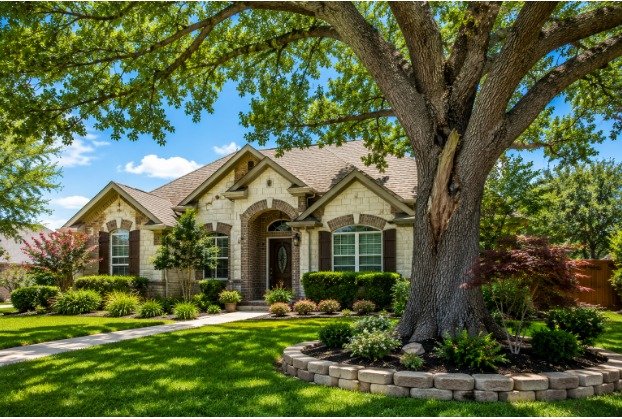
Trees are one of the most valuable features of any landscape. They provide shade, improve curb appeal, increase property value, and create a healthier outdoor environment. However, even healthy trees can develop problems over time due to age, severe weather, disease, pests, or poor growing conditions.
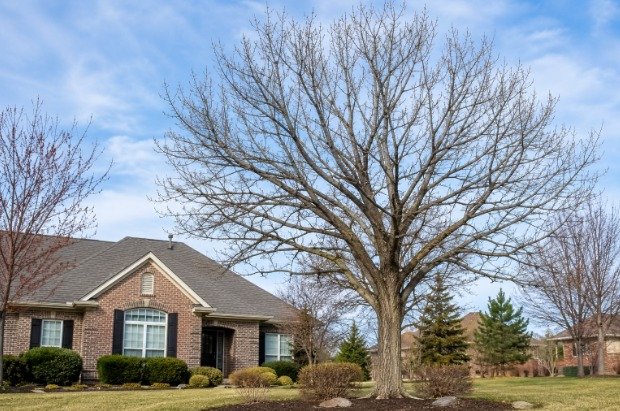
- 1. The Tree Appears Dead or Is in Severe Decline
- 2. The Tree Begins Leaning Suddenly
- 3. More Than Half of the Tree Has Been Damaged
- 4. The Trunk Has Large Cracks, Cavities, or Decay
- 5. The Roots Are Causing Significant Property Damage
- 6. The Tree Shows Signs of Serious Disease or Pest Damage
- 7. The Tree Has Simply Outgrown Its Location
- Tree Trimming vs. Tree Removal
- Don’t Assume the Tree Has to Come Down
- Trust Professionals for Expert Tree Evaluations
While routine tree trimming can improve a tree’s health and appearance, there are situations where removal is the safest and most practical solution. Knowing the warning signs can help protect your home, your family, and your investment.
“Before you assume the worst, it’s important to remember that not all unhealthy-looking trees are dead,” say the experts at Torres Tree Service. “Trees go through natural seasonal cycles, and some signs that appear alarming may simply indicate that the tree is under stress or entering dormancy earlier than usual. A professional evaluation can help determine whether a tree can be saved with proper care or if removal is the safest option.”
If you’ve noticed changes in one of your trees, here are seven signs it may be time to consider Grapevine tree removal instead of simply trimming the branches.
1. The Tree Appears Dead or Is in Severe Decline
One of the clearest indicators that a tree may need to be removed is widespread decline throughout the canopy.
Signs include:
- No leaves during the growing season
- Bark falling off the trunk
- Numerous dead limbs
- Brittle branches that snap easily
- Mushrooms growing around the base
- Little or no new growth
Keep in mind that these symptoms don’t always mean a tree is dead. Drought stress, insect damage, or seasonal dormancy can produce similar symptoms. A professional inspection can determine whether the tree is recoverable or if tree removal in Grapevine is the safest recommendation.
2. The Tree Begins Leaning Suddenly
Many mature trees naturally grow with a slight lean.
However, a tree that suddenly begins leaning—especially after heavy rain or strong winds—may have experienced root failure or structural damage.
Warning signs include:
- Newly exposed roots
- Cracked soil around the trunk
- Lean becoming progressively worse
- Splits forming near the base
A compromised tree can fall without much warning, making prompt evaluation essential.
3. More Than Half of the Tree Has Been Damaged
North Texas storms frequently cause significant damage to mature trees.
If more than half of the canopy has been destroyed, several major scaffold branches have broken, or the trunk has sustained major damage, the tree’s long-term health and stability may be compromised.
Although selective pruning can often restore storm-damaged trees, severe structural damage sometimes makes Grapevine tree removal services the safer long-term solution.
4. The Trunk Has Large Cracks, Cavities, or Decay
The trunk serves as the tree’s primary support system.
Large cracks, hollow sections, or extensive decay can significantly weaken the tree, increasing the risk of failure during storms or high winds.
Look for:
- Deep vertical cracks
- Large cavities
- Soft or rotting wood
- Multiple trunks separating
- Peeling bark accompanied by decay
Not every cavity means a tree needs to be removed, but extensive decay should always be evaluated by a qualified tree professional before deciding between trimming and removal.
5. The Roots Are Causing Significant Property Damage
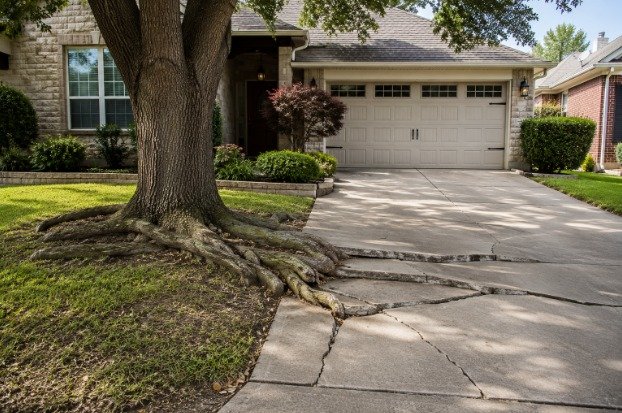
Tree roots naturally spread as they search for water and nutrients, but sometimes they begin interfering with nearby structures. Over time, large roots can lift sidewalks, crack driveways, damage patios, and interfere with irrigation systems.
Common warning signs include:
- Sidewalks that are lifting or becoming uneven
- Cracks in driveways or patios
- Tree roots growing above the soil surface
- Sprinkler lines that are repeatedly damaged
- Roots growing toward the home’s foundation
In some situations, installing a root barrier may help redirect future root growth while preserving the tree. However, if the damage is extensive or the tree was planted too close to a permanent structure, tree removal in Grapevine, TX, may be the safest and most cost-effective long-term solution.
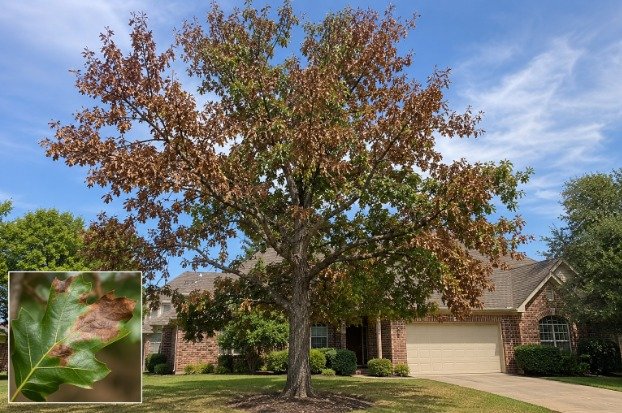
6. The Tree Shows Signs of Serious Disease or Pest Damage
Some tree diseases and insect infestations can be successfully managed when caught early. Others gradually weaken the tree until it becomes structurally unsafe.
Examples include:
- Oak Wilt
- Hypoxylon Canker
- Root Rot
- Severe bark beetle infestations
- Emerald Ash Borer (where present)
Because many diseases produce symptoms similar to drought stress or seasonal changes, it’s important to have the tree professionally evaluated before deciding on removal.
Early diagnosis may allow the tree to be treated, while advanced disease may make Grapevine tree removal the best way to protect nearby trees and your property.
7. The Tree Has Simply Outgrown Its Location
Sometimes a tree is perfectly healthy—but planted in the wrong place.
As trees mature, they may begin growing into areas where they create ongoing maintenance or safety concerns.
Examples include:
- Large limbs hanging over the roof
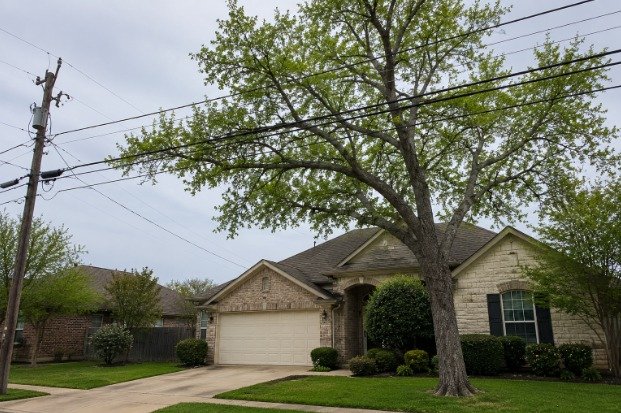
- Branches interfering with power lines
- Roots growing beneath patios or driveways
- Limited clearance between the tree and the home
- Constant debris clogging gutters
Strategic pruning can often reduce these issues. However, if the tree has outgrown its location and continues to threaten nearby structures, a professional Grapevine, TX tree removal company can help determine whether removal is the best long-term solution.
Tree Trimming vs. Tree Removal
Not every tree with visible problems needs to come down. In many cases, proper pruning can restore health, improve structure, and extend the life of the tree. The key is determining whether the tree can be safely preserved.
| Situation | Tree Trimming | Tree Removal |
| Dead or broken limbs | ✅ Usually recommended | ❌ Usually unnecessary |
| Overgrown canopy | ✅ Best solution | ❌ Not needed |
| Branches touching the roof | ✅ Often solves the problem | ❌ Only if the tree is poorly located |
| Tree appears stressed but is still healthy | ✅ Often recommended | ❌ Usually unnecessary |
| Dead or structurally unsafe tree | ❌ Cannot restore stability | ✅ Best option |
| Extensive trunk decay | ❌ Limited benefit | ✅ Often recommended |
| Severe storm damage | ⚠ Depends on severity | ✅ May be necessary |
| Significant root damage to structures | ⚠ Sometimes | ✅ May be the safest long-term solution |
Don’t Assume the Tree Has to Come Down
Seeing an unhealthy tree can be concerning, but removal isn’t always the answer. Many trees recover with proper pruning, improved watering, disease treatment, or other professional care.
The sooner a tree is evaluated, the more options you may have. Waiting until a tree becomes hazardous can limit those options and increase the risk of costly property damage or emergency removal.
When in doubt, have the tree inspected by an experienced professional who can recommend the most appropriate solution based on its health, condition, and location.
Trust Professionals for Expert Tree Evaluations
Whether your tree needs careful pruning to restore its health or safe, professional tree removal is the way to go. Trained arborists provide expert tree trimming, tree removal, and stump grinding services designed to keep your property safe while preserving healthy trees whenever possible.
FAQs
How do I know if my tree needs to be removed or just trimmed?
Many tree problems can be corrected through professional pruning. However, if a tree is dead, structurally unstable, severely diseased, or causing significant property damage, removal may be the safer option. A professional inspection is the best way to determine the right course of action.
Can a dying tree be saved?
Sometimes. Trees suffering from drought stress, pests, or certain diseases may recover with proper treatment. The sooner the problem is identified, the better the chances of saving the tree.
Is a leaning tree always dangerous?
Not necessarily. Some trees naturally grow with a slight lean. However, a tree that suddenly begins leaning or continues leaning more over time should be inspected as soon as possible.
What time of year is best for tree removal?
Tree removal can be performed throughout the year, although dormant-season removals are often easier because trees have fewer leaves. Emergency removals should be completed whenever safety is a concern.
Can tree roots damage my home’s foundation?
Tree roots are more likely to exploit existing cracks than create new ones, but they can lift sidewalks, damage driveways, disrupt irrigation systems, and contribute to problems when trees are planted too close to structures.