


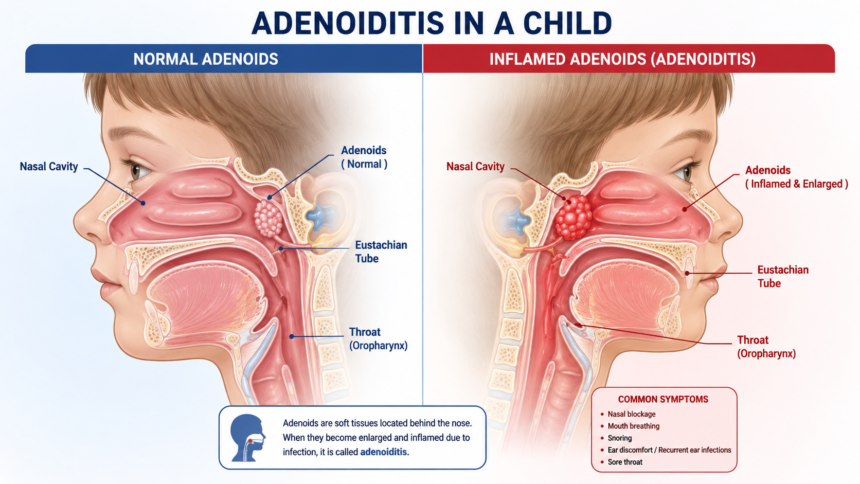
Adenoiditis is one of those health conditions that many people don’t think about until it starts causing real trouble, especially in children. It affects a small but important part of the immune system located in the upper part of the throat behind the nose. When these tissues become swollen or infected, they can lead to breathing issues, sleep problems, and repeated ear infections.
In this guide, we’ll break down everything about Adenoiditis in a simple and easy way. You’ll learn what it is, why it happens, how to recognize the symptoms, and what treatment options are available. The goal is to help you understand the condition without confusing medical jargon.
Whether you’re a parent concerned about your child’s breathing at night or just someone trying to understand persistent nasal issues, this article will walk you through everything step by step.
What is Adenoiditis?
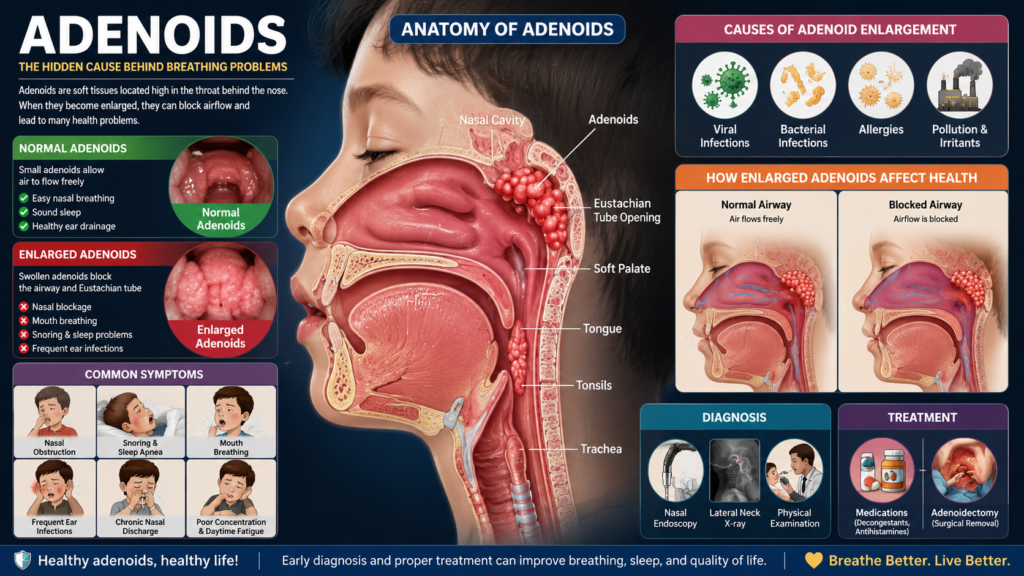
Adenoiditis refers to the inflammation or infection of the adenoids, which are small masses of lymphatic tissue located behind the nasal cavity. These tissues are part of the immune system and help the body fight infections, especially during early childhood.
In simple terms, adenoids act like a defense shield. They trap germs that enter through the nose and mouth. However, sometimes these tissues themselves become infected or swollen, and that condition is called Adenoiditis.
This condition is more common in children between the ages of 3 and 12 because adenoids are more active during early years. As a child grows older, the adenoids usually shrink naturally, and problems become less common. In some cases, adults may also experience adenoid-related issues, but it is far less frequent.
When Adenoiditis develops, the swollen tissue can block airflow through the nasal passages. This leads to mouth breathing, snoring, and sometimes even sleep disturbances. In more severe cases, it can also affect hearing due to pressure on the eustachian tubes.
📌You might also like: Ordenari Explained
Causes of Adenoiditis
Adenoiditis usually develops when the adenoids become infected by viruses or bacteria. Since the adenoids are constantly exposed to germs entering through the nose, they can sometimes become overwhelmed and inflamed.
One of the most common causes is repeated upper respiratory infections. When a child suffers from frequent colds or throat infections, the adenoids have to work harder, which increases the chance of swelling and infection.
Another important cause is bacterial infection. In some cases, bacteria can grow in the adenoid tissue and lead to persistent inflammation. This may result in chronic Adenoiditis, where symptoms last for a long time or keep coming back.
Allergies can also play a role. When a child is exposed to dust, pollen, or other allergens, the immune system reacts strongly, and the adenoids may become enlarged as part of that response. Over time, this constant irritation can lead to chronic inflammation.
In some situations, environmental factors such as pollution or exposure to cigarette smoke can also increase the risk. These irritants weaken the natural defense system of the nose and throat, making infections more likely.
Symptoms of Adenoiditis
The symptoms of Adenoiditis can vary depending on how severe the inflammation is. In mild cases, the signs may be subtle, but in more serious cases, the symptoms can significantly affect daily life.
One of the most noticeable symptoms is difficulty breathing through the nose. Because the adenoids are located in the back of the nasal passage, swelling can block airflow and force the person to breathe through the mouth.
Snoring is another common sign, especially during sleep. Children with Adenoiditis often breathe loudly at night, and their sleep may be disturbed. In some cases, brief pauses in breathing can also occur, which can be worrying for parents.
Frequent ear infections are also linked to this condition. The adenoids are located near the tubes that connect the throat to the ears. When swollen, they can block these tubes and cause fluid buildup, leading to infections or temporary hearing issues.
A child with Adenoiditis may also have a constantly runny nose or nasal congestion. This can make their voice sound blocked or nasal, as if they always have a cold.
Bad breath is another symptom that often goes unnoticed. Since infected adenoids can trap bacteria, they can lead to unpleasant breath even with good oral hygiene.
📌You might also like: Inomyalgia
How Adenoiditis is Diagnosed
Doctors usually begin diagnosing Adenoiditis by asking about symptoms and medical history. They will want to know how often infections occur, whether there is snoring, and if breathing problems are present.
A physical examination is often done using special tools to look at the throat and nasal passages. Since adenoids are not directly visible through the mouth, doctors may use a small mirror or a flexible camera called an endoscope to get a clear view.
In some cases, imaging tests like X-rays may be recommended. These help determine the size of the adenoids and whether they are blocking airflow.
Hearing tests may also be done if there are signs of ear problems. This helps check whether fluid buildup is affecting hearing ability.
Diagnosis is usually straightforward, especially in children who show classic symptoms like mouth breathing, snoring, and frequent infections.
Treatment Options for Adenoiditis
Treatment for Adenoiditis depends on how severe the condition is and how often symptoms occur. In many mild cases, the condition can improve on its own or with simple medical care.
Doctors often prescribe medications first. Antibiotics may be used if the infection is bacterial. These help reduce the infection and inflammation in the adenoids. If allergies are contributing to the problem, antihistamines or nasal sprays may be recommended to control the allergic response.
In many cases, nasal sprays that reduce swelling can help improve breathing and reduce discomfort. These are often used for a limited period under medical supervision.
If the condition becomes chronic or keeps coming back, doctors may suggest surgical removal of the adenoids. This procedure is called adenoidectomy. It is a common and generally safe surgery, especially in children who experience repeated infections or breathing issues.
Surgery is usually recommended when Adenoiditis starts affecting sleep, hearing, or quality of life. After removal, most children experience significant improvement in breathing and a reduction in infections.
Home Care and Recovery Support
Along with medical treatment, home care plays an important role in managing Adenoiditis. Keeping the environment clean and free from dust can help reduce irritation in the nasal passages.
Warm fluids like soup or herbal drinks may help soothe throat discomfort and keep the body hydrated. Proper hydration is important because it helps thin mucus and makes breathing easier.
Steam inhalation is another simple method that can provide relief from nasal blockage. It helps open up the airways and reduces congestion temporarily.
Rest is also very important during an infection. When the body gets enough rest, the immune system works better and helps fight the infection more effectively.
Parents should also monitor children’s sleep patterns. If snoring or breathing pauses are noticed, it is important to consult a doctor for further evaluation.
Complications of Untreated Adenoiditis
If Adenoiditis is not treated properly, it can lead to several complications over time. One of the most common issues is chronic ear infections due to blocked ear tubes. This can sometimes affect hearing if left untreated.
Long-term mouth breathing can also affect facial development in children. It may lead to changes in jaw structure and dental alignment if the condition persists for a long time.
Sleep disturbances are another major concern. Poor sleep can affect a child’s concentration, behavior, and overall growth.
In rare cases, chronic infection can spread and cause repeated throat or sinus infections, making the condition more difficult to manage.
Because of these possible complications, early diagnosis and proper treatment are very important.
Adenoiditis in Children vs Adults
Adenoiditis is mostly seen in children because their adenoids are larger and more active during the early years. In children, the symptoms are usually more noticeable, including snoring, mouth breathing, and frequent colds.
In adults, the condition is less common because adenoids naturally shrink with age. However, when it does occur, it may be linked to chronic infections, allergies, or long-term nasal issues.
Adults may experience symptoms like nasal blockage, sinus pressure, or recurring throat infections. Since these symptoms can overlap with other conditions, proper diagnosis is important.
Treatment in both children and adults depends on severity, but surgery is more commonly recommended for children with persistent issues.
When to See a Doctor
It is important to seek medical advice if symptoms of Adenoiditis last longer than expected or keep returning frequently. Persistent snoring, difficulty breathing through the nose, or repeated ear infections should not be ignored.
If a child shows signs of poor sleep, constant fatigue, or difficulty concentrating during the day, it may also be linked to breathing issues caused by enlarged adenoids.
Early consultation with a doctor can help prevent complications and ensure proper treatment at the right time.
Conclusion
Adenoiditis is a common but often overlooked condition, especially in children. While it may start as a simple infection, it can lead to breathing difficulties, sleep problems, and ear-related issues if not treated properly.
The good thing is that most cases can be managed effectively with medication, proper care, and in some cases, surgery. Understanding the symptoms early and seeking timely medical advice can make a big difference in recovery.
With the right treatment and attention, most people recover well and return to normal, healthy breathing and sleep patterns.