


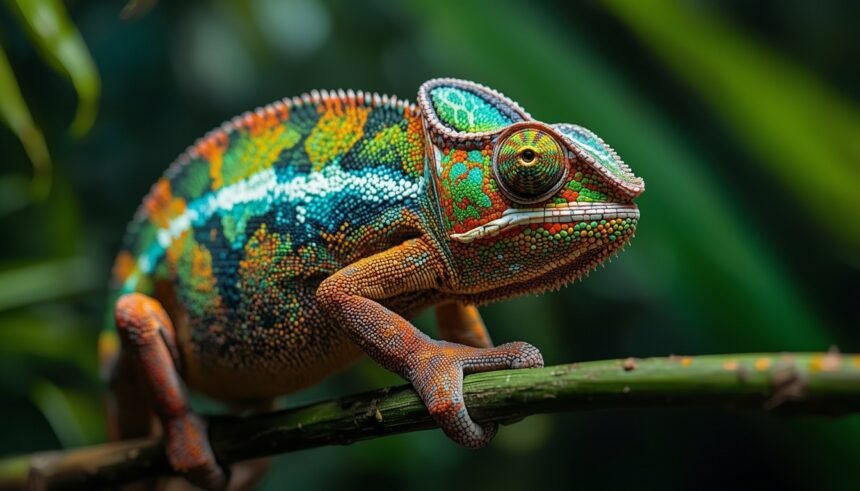
Chameleons are one of the most fascinating reptiles on Earth because of their color-changing ability and strange body features. Many people think they only change color for hiding, but their behavior is much more complex and scientific. They are slow, smart, and highly adapted creatures that survive in very specific environments.
The family chameleónovité includes many species spread across tropical regions like Africa and Madagascar. Each species has slightly different features, but all share similar survival tools like sticky tongues, rotating eyes, and gripping feet. These reptiles are specially built for life in trees and dense forests.
In this article, we will simply explore everything about chameleónovité. You will learn how they live, hunt, communicate, and survive in nature. It will help you understand why they are considered one of the most unique reptiles in the world.
What is Chameleónovité?
Chameleónovité is the biological family of chameleons, a group of reptiles known for their unusual adaptations. They are not ordinary lizards because their body structure is designed for climbing and surviving in trees. Their feet, tail, and eyes all work together to help them live in forest environments.
Most chameleons spend their entire life in trees and bushes. They rarely come down to the ground because their survival depends on staying hidden and moving slowly. Their lifestyle is built around patience, balance, and perfect control of movement in nature.
This family includes many species with different sizes and colors. Some are very small, while others can grow much larger. Even though they look different, all chameleónovité share the same core features that make them unique among reptiles.
The Science Behind Color Change
Chameleons change color using special skin cells called chromatophores and other reflective layers beneath the skin. These layers control how light is reflected, creating different colors depending on the situation. It is not just simple camouflage as many people believe.
When a chameleon is calm, it often shows green or brown colors that match its environment. When it is excited, stressed, or trying to communicate, its skin can shift into bright shades like red, yellow, or blue very quickly and dramatically.
Color change is mainly used for communication, temperature control, and emotional expression. Scientists believe chameleons use color signals to interact with each other in ways humans are still trying to fully understand today.
Chameleon Eyes and Vision
Chameleónovité have some of the most advanced eyes in the animal kingdom. Each eye can move independently, allowing them to see in two different directions at the same time. This gives them a complete view of their surroundings without moving their body.
Their eyes are covered by a cone-shaped structure that protects them while still allowing precise vision. This design helps them stay safe from predators while maintaining a sharp focus on movement around them in dense forest environments.
When a chameleon detects prey, both eyes lock onto the same target. This creates extremely accurate depth perception, allowing them to calculate distance perfectly before striking with their tongue in a fast and precise attack.
How Chameleons Hunt
Chameleons are silent and patient hunters that rely on timing rather than speed. They usually stay completely still for long periods, waiting for insects to come close enough. This energy-saving method makes them very effective predators in the wild.
Their tongue is one of the fastest natural weapons in nature. It can shoot out at incredible speed, sometimes longer than the chameleon’s own body. The tip is sticky, which helps grab insects instantly without giving them a chance to escape.
After catching prey, the tongue retracts back into the mouth in less than a second. This fast and efficient hunting style allows chameleónovité to survive even in environments where food is not always easy to find.
Habitat of Chameleónovité
Chameleons live mostly in tropical and warm regions where forests provide food, shelter, and humidity. Madagascar is the most important place for chameleon diversity, as it has many unique species found nowhere else on Earth.
They are also found in Africa and parts of Asia. These environments offer trees, leaves, and insects that are necessary for their survival. Without vegetation, chameleons cannot hide or hunt properly in the wild.
Unfortunately, deforestation is destroying many of their habitats. As forests disappear, chameleónovité lose their natural homes, which puts many species at risk of decline or extinction in the future.
Movement and Survival Style
Chameleons move very slowly, and this slow movement is actually a survival strategy. Moving slowly helps them avoid detection from predators that rely on movement to spot prey in forests and trees.
Their feet are specially designed for gripping branches. Each foot works like a strong clamp that wraps tightly around tree branches, giving them excellent balance and control while climbing in different directions.
Their tail acts like an extra limb that help them hold onto branches. It provides stability and prevents them from falling, especially when they are resting or moving carefully between trees.
Behavior and Communication
Chameleons use color changes as their main way of communication. Bright colors often indicate dominance, mating interest, or aggression, while darker colors can show fear, stress, or submission depending on the situation.
They also use body movements such as head bobbing or inflating their bodies to appear larger. These behaviors help them protect themselves from threats or compete with other chameleons in their territory.
Because they live in dense forests, sound is not very effective for communication. That is why chameleónovité rely mostly on visual signals instead of vocal communication.
Life Cycle of Chameleónovité
Some chameleon species lay eggs, while others give birth to live young, depending on their species. Egg-laying females carefully hide their eggs in soil or safe locations to protect them from predators.
The eggs develop over time and hatch without any parental care. Once the babies are born, they are completely independent and must learn to survive on their own immediately.
Their lifespan varies depending on species and environment. Smaller chameleons may live only a few years, while larger ones can survive much longer, especially in safe captive conditions.
Threats and Challenges
Chameleons face several serious threats in the modern world. The biggest problem is habitat loss caused by deforestation, which removes the trees and forests they depend on for survival and hunting.
Climate change also affects their natural environment by altering temperature and humidity levels. Since chameleons are sensitive to environmental conditions, even small changes can impact their survival.
Another major issue is the illegal pet trade. Many wild chameleons are captured and sold, reducing their population in nature and disturbing the ecological balance in their habitats.
Why Chameleónovité Are Special
Chameleons are unique because every part of their body has a special function. Their eyes, tongue, feet, and skin all work together to help them survive in complex environments like forests and trees.
They are not just visually interesting but also highly evolved reptiles. Their adaptations show how nature creates perfect solutions for survival over millions of years of evolution and environmental pressure.
Chameleónovité remain one of the most fascinating examples of biological specialization, showing how diverse and intelligent nature can be when shaping life on Earth.
Conclusion
Chameleónovité are truly remarkable reptiles with abilities that make them stand out in the animal kingdom. Their color-changing skin, advanced vision, and fast hunting skills are all perfectly designed for survival.
They play an important role in ecosystems and remind us how delicate and diverse nature is. Protecting their habitats ensures that future generations can continue to learn from and admire these incredible creatures.
FAQs about Chameleónovité
1. What does chameleónovité mean?
Chameleónovité is the scientific family name for chameleons. It includes all species of chameleons found in different parts of the world, especially in Africa, Madagascar, and tropical regions. These reptiles are known for their unique body structure, color-changing ability, and special hunting techniques.
2. Why do chameleons change color?
Chameleons change color mainly for communication, temperature control, and emotional response. Many people think it is only for camouflage, but in reality, color changes help them express stress, attraction, dominance, or calm behavior in different situations.
3. Where do chameleónovité live?
Chameleónovité mainly live in warm and tropical environments. The largest number of species is found in Madagascar, but they also exist in Africa, southern Europe, and parts of Asia. They prefer forests, trees, and areas with high humidity and insect availability.
4. What do chameleons eat in the wild?
Chameleons mainly eat insects such as crickets, flies, grasshoppers, and small bugs. Their long, sticky tongue allows them to catch prey quickly from a distance. Some larger species may also eat small reptiles or birds when available in their habitat.
5. Are chameleons good pets for beginners?
Chameleons are not ideal pets for beginners because they require very specific care. They need controlled temperature, humidity, proper lighting, and a stress-free environment. Without proper care, they can easily become sick or stressed, so experienced reptile keepers handle them better.