


Introduction: The Photographer’s Dilemma
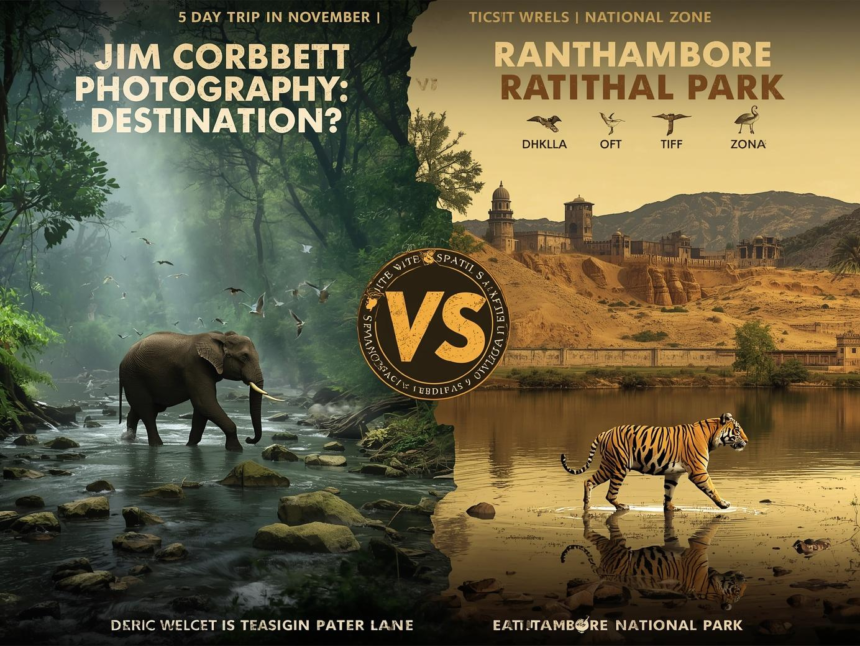
Choosing between Jim Corbett National Park and Ranthambore National Park is a classic dilemma for wildlife photographers traveling to India. Both reserves are famous for their Bengal tigers, yet they provide very different photographic environments. Corbett is known for its dense forests, riverbanks, and misty atmosphere, offering opportunities for moody, storytelling images. In contrast, Ranthambore features open landscapes, dry deciduous forests, and ancient ruins, making it easier to capture dramatic wildlife portraits with clean backgrounds and strong visual impact.
- Introduction: The Photographer’s Dilemma
- Overview of the Two Parks
- Landscape Differences: Green vs Golden
- Wildlife Diversity and Biodiversity
- Tiger Sightings: Probability Matters
- Photography Style: Story vs Drama
- Terrain and Visibility
- Best Zones for Photography
- Budget Considerations (5-Day Trip)
- Accessibility and Travel Costs
- Best Time for Photography
- Bird Photography Opportunities
- Unique Elements: What Sets Them Apart
- Learning Curve for Photographers
- Final Verdict: Which One Should You Choose?
For a 5-day budget trip, this choice becomes even more important because time and resources are limited. Photographers must prioritize destinations that maximize sightings while also delivering diverse portfolio shots. Ranthambore generally offers higher chances of spotting tigers due to better visibility, making it ideal for those focused on big cats. Meanwhile, Corbett rewards patience with richer biodiversity, including elephants and birdlife, allowing photographers to build a more varied collection of images beyond just tiger photography.
Overview of the Two Parks
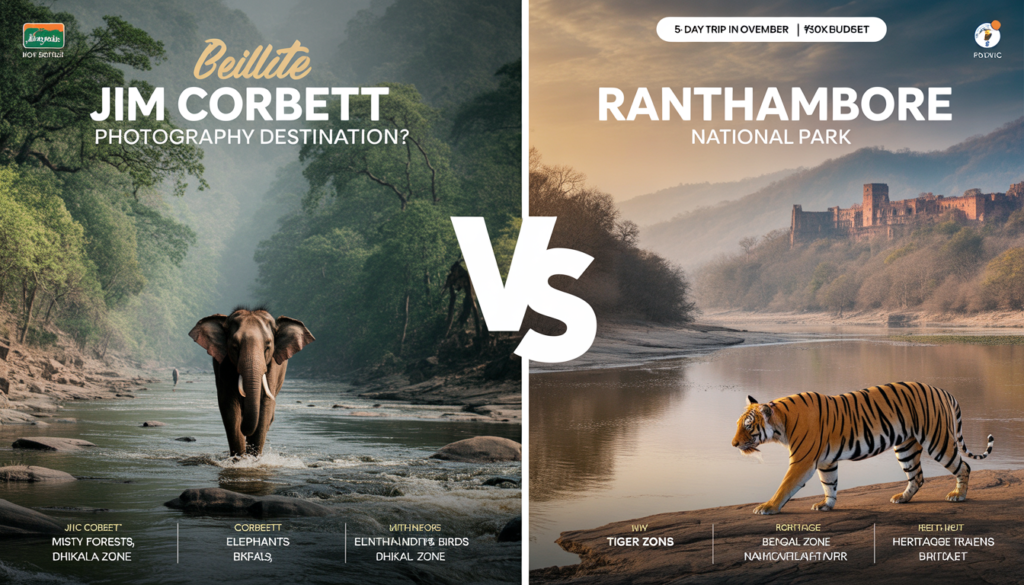
Jim Corbett National Park, established in 1936, is India’s oldest national park and is celebrated for its rich ecological diversity. The park features a mix of dense sal forests, riverine belts, expansive grasslands, and the Ramganga River flowing through its core. This variety of habitats supports a wide range of wildlife, making it a dynamic destination for photographers who enjoy capturing different moods, textures, and layers within a single landscape.
Ranthambore National Park, in contrast, is known for its dry deciduous forests, rocky terrain, and historic ruins scattered across the park. The presence of the iconic Ranthambore Fort and ancient structures gives the landscape a cinematic and timeless quality. These open spaces and dramatic backdrops allow photographers to frame wildlife—especially tigers—against visually striking settings that feel almost like scenes from a film.
Both parks are home to the majestic Bengal tiger, but their terrain and wildlife behavior differ significantly. In Corbett, dense vegetation often makes sightings more challenging, requiring patience and skill to capture animals in their natural habitat. In Ranthambore, the open terrain increases visibility, making it easier to spot and photograph tigers as they move across lakes, ruins, and forest clearings.
 You might also like: MyReadignamga
Landscape Differences: Green vs Golden
Jim Corbett National Park offers lush greenery, misty mornings, and serene riverine landscapes that feel almost cinematic in a subtle, atmospheric way. The presence of the Ramganga River winding through dense sal forests creates natural layers, depth, and soft lighting conditions. These elements make it an excellent setting for storytelling photography, where animals are captured as part of a broader ecosystem rather than isolated subjects.
In contrast, Ranthambore National Park is defined by its dry forests, open grasslands, scattered lakes, and ancient ruins that add character to every frame. The golden hues of the landscape, especially during sunrise and sunset, provide a dramatic backdrop that enhances contrast and clarity. This environment is ideal for striking wildlife portraits, allowing photographers to capture animals—particularly tigers—in bold, visually powerful compositions.
Wildlife Diversity and Biodiversity
Jim Corbett National Park is richer in biodiversity, making it a haven for photographers interested in more than just big cats. The park is home to Asian elephants, deer species, reptiles, and over 600 species of birds, offering endless opportunities for varied wildlife photography. This diversity allows photographers to experiment with different subjects, from large mammals to colorful birdlife, creating a well-rounded and dynamic portfolio.
In comparison, Ranthambore National Park has slightly less biodiversity but places a stronger emphasis on large predators. The park is especially known for its population of Bengal tigers and also offers chances to spot leopards and other carnivores. This makes it an excellent choice for photographers whose primary goal is to capture powerful, close-up images of iconic predators in dramatic settings.
Tiger Sightings: Probability Matters
If your primary goal is tiger photography, Ranthambore has a clear edge.
- Ranthambore: ~60–70% sighting probability
- Corbett: ~40–50% sighting probability
This is mainly due to Ranthambore’s open terrain, which makes spotting easier.
Photography Style: Story vs Drama
Jim Corbett National Park is perfect for environmental storytelling, where the focus goes beyond just the animal to include its surroundings. The dense forests, misty mornings, and layered vegetation allow photographers to frame wildlife within a rich natural context. Instead of isolated subjects, you capture scenes that tell a broader story—animals moving through fog, crossing riverbanks, or blending into textured backgrounds, creating depth and emotion in every shot.
On the other hand, Ranthambore National Park is ideal for dramatic wildlife portraits. Its open landscapes and distinct features like lakes and ancient ruins provide clean, striking backdrops. Tigers are often spotted in clear view, allowing photographers to capture sharp, powerful images with strong contrast and composition. This makes Ranthambore especially appealing for those aiming to build a portfolio of bold, iconic wildlife portraits.
You might also like: Peitner
Terrain and Visibility
Jim Corbett National Park presents a unique challenge for photographers due to its dense forests and thick vegetation. Wildlife often remains partially hidden, requiring patience, quick reflexes, and a strong understanding of light and composition. Capturing a perfect frame here can take time, but when it happens, the results feel more natural, immersive, and deeply rewarding.
This complexity makes Corbett especially appealing to experienced photographers who enjoy pushing their creative limits. The interplay of light filtering through trees, combined with mist and layered foliage, allows for artistic shots that go beyond standard wildlife portraits. It’s a place where skill and persistence often translate into truly memorable images.
In contrast, Ranthambore National Park offers open terrain that makes wildlife easier to spot and photograph. The clearer lines of sight allow for cleaner compositions and better framing, which is particularly helpful for beginners. With fewer visual obstructions, photographers can focus more on timing and subject positioning, making it easier to capture sharp, impactful wildlife images.
Best Zones for Photography
Corbett:
- Dhikala: Grasslands and elephants
- Bijrani: Balanced wildlife sightings
- Jhirna: Year-round access
Ranthambore:
- Zone 3: Lakes and high tiger activity
- Zone 2: Consistent sightings
- Zone 4: Scenic backgrounds
Budget Considerations (5-Day Trip)
For a budget traveler, Corbett often provides better value due to:
- More accommodation options
- Flexible safari choices
- Lower average costs
Ranthambore can be slightly pricier, especially for premium safari zones, but offers higher chances of sightings, which may justify the cost.
Accessibility and Travel Costs
Jim Corbett National Park is generally easier to access from Delhi, especially by road. The drive is relatively straightforward and scenic, passing through towns and foothill landscapes, which makes it a popular weekend and short-trip destination. This convenience often reduces planning complexity and allows photographers to carry more equipment without worrying too much about strict travel logistics.
In comparison, Ranthambore National Park is well-connected by rail, with the nearest major station at Sawai Madhopur. It is also relatively close to Jaipur, making it accessible for travelers coming from western and central India. Train connectivity makes it a comfortable option for budget travelers who prefer avoiding long road journeys while still reaching a prime wildlife destination efficiently.
Overall, travel costs between the two parks remain fairly comparable when factoring in accommodation, safaris, and transport. However, your starting location plays a major role in deciding which destination is more practical. If you are closer to Delhi or northern India, Corbett becomes more convenient, while Ranthambore may be a better choice for those traveling from Rajasthan, Maharashtra, or central regions.
You might also like: Ciulioneros
Best Time for Photography
November is ideal for both parks:
- Pleasant weather
- Post-monsoon greenery
- Soft lighting conditions
In Ranthambore, animals gather near waterholes, improving sighting chances.
Bird Photography Opportunities
Jim Corbett National Park is a true paradise for bird photographers, with more than 600 recorded species spread across its forests, grasslands, and riverine zones. This incredible diversity includes both resident and migratory birds, offering constant variety throughout the year. For photographers, this means endless opportunities to capture vibrant plumage, unique behaviors, and rare sightings, making it an excellent destination for building a diverse and colorful wildlife portfolio.
In contrast, Ranthambore National Park has fewer bird species, but it still provides rewarding opportunities, especially around lakes and water bodies like Padam Talao and Malik Talao. These areas attract waterbirds and raptors, creating good conditions for bird photography during early mornings and late afternoons. While not as diverse as Corbett, Ranthambore still offers quality chances to capture birds alongside its more famous big cat sightings.
Unique Elements: What Sets Them Apart
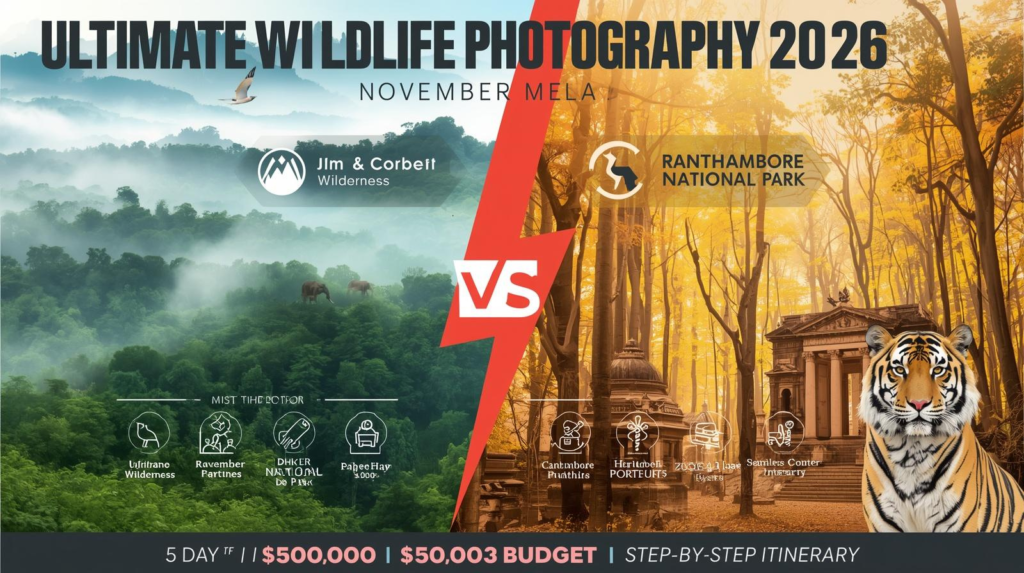
Ranthambore National Park stands out for its unique blend of wildlife and history, most notably through the presence of the ancient Ranthambore Fort. The fort and surrounding ruins add a dramatic, almost cinematic quality to wildlife photography, allowing rare compositions where tigers, deer, or leopards are framed against centuries-old stone structures. This combination of heritage and nature creates images that feel both powerful and timeless.
In contrast, Jim Corbett National Park offers a more immersive jungle experience set against the backdrop of the Himalayan foothills. The park’s flowing rivers, dense sal forests, and mist-covered valleys create a deeply atmospheric environment. Instead of historical ruins, Corbett emphasizes raw wilderness, where photography feels more intimate and connected to untouched nature, making it ideal for capturing the essence of a living, breathing forest ecosystem.
Learning Curve for Photographers
Ranthambore National Park is often considered beginner-friendly because of its open landscapes and relatively higher chances of wildlife sightings, especially tigers. The clear visibility across lakes, grasslands, and forest patches allows new photographers to quickly spot subjects and practice framing without struggling too much with obstructions. This makes it easier to focus on timing, exposure, and composition while still getting strong wildlife shots.
In contrast, Jim Corbett National Park is better suited for experienced photographers who enjoy working with challenges and more complex compositions. The dense forests, shifting light conditions, and limited visibility demand patience and technical skill. However, these same difficulties reward photographers with more nuanced and artistic images, where wildlife is naturally integrated into layered, atmospheric jungle scenes.
Final Verdict: Which One Should You Choose?
Choose Ranthambore if:
- You want higher tiger sighting chances
- You prefer dramatic, clean wildlife shots
- You are a beginner photographer
- You have limited time
Choose Corbett if:
- You want diverse wildlife photography
- You prefer storytelling and landscapes
- You enjoy bird photography
- You want better budget flexibility
Conclusion
Ranthambore National Park is often the better choice if your 5-day trip is centered on maximizing tiger sightings and capturing bold, high-impact wildlife images. Its open terrain, water bodies, and clearer sightlines make it easier to spot big cats, especially the Bengal tiger. This increases the chances of getting dramatic action shots and clean compositions, which is ideal for photographers who want strong portfolio-ready images in a limited timeframe.
On the other hand, Jim Corbett National Park offers a richer and more diverse photography experience that goes beyond tiger sightings. Its dense forests, river systems, and misty landscapes create atmospheric conditions perfect for storytelling photography. With a wider variety of wildlife, including birds and elephants, Corbett rewards patience with layered, artistic shots that capture the essence of a true wilderness ecosystem.
FAQs
Which is better for tiger photography: Corbett or Ranthambore?
Ranthambore National Park is generally better for tiger photography because of its open landscapes and higher chances of sightings. Tigers are often visible near lakes and clear forest patches, making it easier to capture sharp, dramatic images. In contrast, Jim Corbett National Park has denser forests, so sightings can be less frequent but more natural and immersive.
Which park is more budget-friendly for a 5-day trip?
Both parks can be managed on a budget, but Corbett often offers more affordable accommodation options and flexible safari choices. Ranthambore may be slightly costlier in peak zones due to higher demand for tiger sightings. However, overall costs depend on travel distance, safari zones, and season.
Which destination is better for beginners in wildlife photography?
Ranthambore is more beginner-friendly because wildlife is easier to spot in open terrain. The clearer visibility helps new photographers focus on framing and timing. Corbett, on the other hand, is more challenging and suits those who already understand wildlife behavior and composition techniques.
Which park offers better biodiversity and variety?
Corbett is richer in biodiversity, hosting elephants, deer, reptiles, and over 600 bird species. It is ideal for photographers who want variety beyond big cats. Ranthambore has fewer species but focuses more on large predators like tigers and leopards, making it more specialized.
Which park gives a better overall photography experience in 5 days?
It depends on your goal. If you want high chances of tiger sightings and bold wildlife portraits, Ranthambore is ideal. If you prefer storytelling, landscapes, birds, and a more immersive jungle experience, Corbett is the better choice.