


Piranhas are some of the most misunderstood fish in the world. Most people imagine them as aggressive, unstoppable predators, but the real story is much more balanced and interesting. These freshwater fish play an important role in South American river ecosystems and have a biology that is far more complex than their reputation suggests.
- What Is a Piranha Fish?
- Scientific Classification of Piranha
- Habitat and Natural Distribution
- Physical Characteristics and Size
- Diet and Feeding Behavior of Piranhas
- Species and Diversity of Piranhas
- Behavior and Myth vs Reality
- Reproduction and Life Cycle
- Predators and Ecological Role
- Conservation Status and Human Impact
- Fascinating Facts About Piranhas
In this guide, we will explore everything about the Piranha, including where they live, what they eat, how big they grow, and the truth behind their fearsome image. You will also discover surprising facts that show why these fish are more fascinating than frightening.
What Is a Piranha Fish?
The Piranha is a freshwater fish belonging to the family Serrasalmidae and the order Characiformes. Scientifically, it includes multiple species under genera like Serrasalmus and Pygocentrus. These fish are native to South America and are commonly found in large river systems such as the Amazon, Orinoco, Paraguay, and São Francisco rivers.
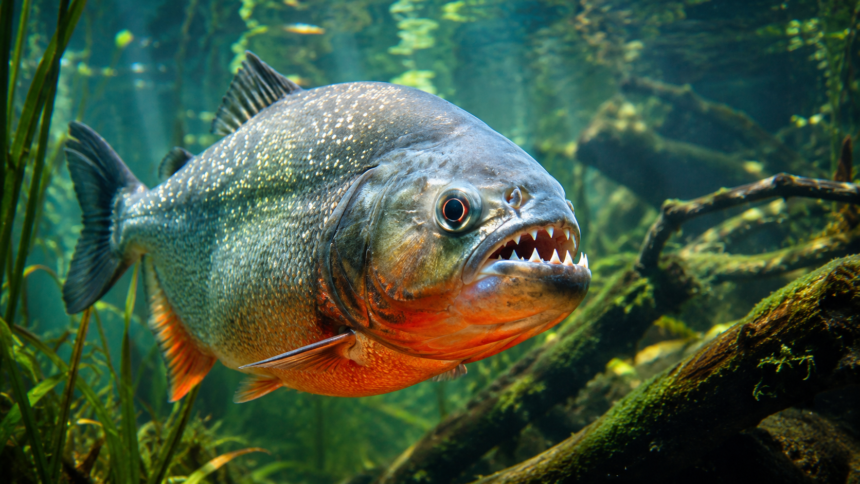
Piranhas are known for their sharp, triangular teeth and strong jaws, which give them a powerful bite. Their body shape is usually compact and streamlined, which helps them move quickly through water. Most species have a silvery appearance with hints of red or orange pigmentation, especially around the belly area.
Despite their reputation in popular media, most Piranha species are not aggressive hunters of large animals. In reality, they are opportunistic feeders that often scavenge or feed on smaller aquatic life and plant material. Only a few species are considered more aggressive, and even those rarely pose a real threat to humans.
In the natural world, the Piranha plays an important role in maintaining balance within freshwater ecosystems by controlling fish populations and cleaning up organic waste.
Scientific Classification of Piranha
From a scientific perspective, the Piranha belongs to a well-defined taxonomic structure that places it among ray-finned fishes. This classification helps scientists understand its evolutionary relationships and biological characteristics.
Piranhas fall under the kingdom Animalia, which includes all animals. They belong to the phylum Chordata, meaning they have a spinal cord. Their class is Osteichthyes, which includes all bony fishes. Within this class, they are grouped under the order Characiformes, a large order of freshwater fish mostly found in Africa and South America.
Their family, Serrasalmidae, includes piranhas and their close relatives such as pacus. The genus commonly associated with true piranhas includes Serrasalmus species. One well-known example is Serrasalmus nattereri, often associated with the red-bellied Piranha.
This classification shows that Piranhas are not isolated monsters of nature but part of a diverse and ecologically important group of freshwater fish.
Habitat and Natural Distribution
Piranhas are native to South America and are primarily found in freshwater river systems. They thrive in warm, slow-moving waters where food sources are abundant and environmental conditions remain stable throughout the year.
Their natural habitat includes rivers, floodplains, lakes, and seasonal water bodies. The Amazon Basin is the most well-known home of the Piranha, but they also exist in the Paraguay River system, Orinoco River, and other connected waterways. These environments provide dense vegetation and a rich supply of prey and plant material.
During the rainy season, Piranhas often spread across flooded forests, which gives them access to new feeding grounds. However, in the dry season, water levels drop, and they can become trapped in smaller pools. This environmental pressure often influences their feeding behavior and social interactions.
In such isolated conditions, competition for food increases, and Piranhas may become more active feeders. However, this does not automatically mean they turn into aggressive predators of large animals. Instead, they simply adapt to survival conditions like any other species.
Physical Characteristics and Size
Piranhas have a distinctive body structure that makes them easily recognizable. Their bodies are typically deep and laterally compressed, allowing them to maneuver quickly in water. They have a blunt head with a strong jaw structure designed for biting and tearing.
One of the most famous features of the Piranha is its teeth. These teeth are triangular, razor-sharp, and interlock like scissors when the jaw closes. This gives them a very efficient bite, especially for cutting through flesh, scales, and plant material.
In terms of size, most Piranha species are relatively small. The average adult Piranha grows between 20 to 30 centimeters (8 to 12 inches) in length. Some species can grow slightly larger, reaching up to 50 to 60 centimeters in rare cases.
Their coloration varies depending on species and age. Many Piranhas display silver tones with red or orange patches, especially around the belly or throat region. Juvenile Piranhas often have more muted colors, which become brighter as they mature.
Their body design is not just for appearance; it plays a key role in their survival, helping them move quickly, avoid predators, and capture food efficiently.
Diet and Feeding Behavior of Piranhas
The diet of the Piranha is one of the most misunderstood aspects of its biology. While they are often labeled as carnivorous killers, their feeding habits are far more diverse and flexible.
Most Piranhas are omnivores, meaning they consume both animal and plant material. Their diet includes small fish, aquatic insects, crustaceans, seeds, fruits, and decaying organic matter. In many cases, plant-based food makes up a significant portion of their diet.
Young Piranhas tend to feed on smaller organisms such as insects and plankton. As they grow, they expand their diet to include fish and other available food sources. Some species are also known to scavenge, feeding on dead animals rather than actively hunting live prey.
In certain conditions, such as during dry seasons when food becomes scarce, Piranhas may display more aggressive feeding behavior. When trapped in limited water bodies, competition increases, and they may feed more opportunistically. However, even in these situations, attacks on large animals or humans remain extremely rare.
Their feeding behavior is shaped more by environmental conditions than by inherent aggression. This makes them highly adaptable survivors in changing river ecosystems.
Species and Diversity of Piranhas
There are more than 60 recognized species of Piranhas found across South America. These species vary in size, behavior, and feeding preferences. Some are more carnivorous, while others are largely herbivorous or scavengers.
One of the most well-known species is the red-bellied Piranha, which is often considered the most aggressive. However, even this species spends much of its time feeding on plants and small aquatic organisms.
Other species are even more specialized. Some Piranhas feed mainly on fins and scales of other fish, while others focus on fruits and seeds that fall into the water. This diversity shows how adaptable the group is as a whole.
Despite differences, all Piranha species share key features such as strong jaws, sharp teeth, and a preference for warm freshwater habitats. These shared traits help classify them as a closely related group within the fish family tree.
Behavior and Myth vs Reality
The reputation of the Piranha has been heavily shaped by movies, media, and exaggerated stories. In popular culture, they are often portrayed as aggressive killers that attack anything in the water. However, scientific observations tell a very different story.
Most Piranhas are cautious fish that prefer to avoid unnecessary risk. They often swim in groups for protection against predators rather than to hunt large prey. Their behavior is more defensive than offensive in nature.
While Piranhas can feed in groups under certain conditions, especially when food is scarce, this behavior is not the same as coordinated hunting of large animals. Instead, it is a feeding response triggered by opportunity and environmental stress.
Many researchers who have studied Piranhas in the wild report that attacks on humans are extremely rare. In fact, people living near rivers where Piranhas exist often swim and fish without major issues.
The gap between myth and reality is wide, and understanding their true behavior helps correct long-standing misconceptions about these fish.
Reproduction and Life Cycle
Piranhas reproduce by laying eggs, a process known as oviparous reproduction. During breeding season, females deposit eggs in shallow water or among aquatic vegetation, where males fertilize them externally.
After fertilization, the eggs hatch within a few days, depending on water temperature and environmental conditions. The young Piranhas, called fry, are initially very small and vulnerable.
In early stages, fry feed on microscopic organisms such as plankton and tiny insects. As they grow, they gradually shift to a more varied diet. Growth rates depend heavily on food availability and water conditions.
Parental care in Piranhas is limited, and young fish must quickly learn to survive in a competitive environment. This early independence is a key factor in their survival strategy in the wild.
Predators and Ecological Role
Even though Piranhas are often seen as predators, they also have natural enemies. Large aquatic predators such as crocodiles, Amazon river dolphins, and certain bird species like herons prey on them.
These predators help maintain balance in the ecosystem by controlling Piranha populations. However, in some regions where natural predators have declined, Piranha populations have increased.
Within their ecosystems, Piranhas play an important role in cleaning up dead matter and controlling smaller fish populations. This helps maintain ecological balance in freshwater systems.
They are not just predators but also scavengers and contributors to nutrient cycling in river environments.
Conservation Status and Human Impact
Currently, Piranhas are not considered endangered. According to conservation data, they are not listed under CITES or major global threat categories. Their populations remain stable in most regions.
However, human activities such as pollution, deforestation, and dam construction can impact their habitats. Changes in water flow and quality can affect food availability and breeding grounds.
Interestingly, humans also interact with Piranhas through fishing and the aquarium trade. In some areas, they are caught for food, while in others they are kept as exotic pets.
Proper handling is important in captivity, as their strong bite can cause injury. Despite their fearsome reputation, they are manageable with proper care and knowledge.
Fascinating Facts About Piranhas
Piranhas have several surprising traits that make them unique among freshwater fish. One of the most interesting facts is that their reputation for extreme aggression is largely exaggerated. Most species are not dangerous to humans at all.
They also have incredibly strong jaws relative to their body size, allowing them to bite with impressive force. Their teeth are continuously replaced throughout their lives, ensuring they remain sharp and functional.
Another fascinating fact is that Piranhas communicate using sounds, especially during feeding or social interactions. This helps coordinate group behavior in certain situations.
They are also highly adaptable and can survive in changing water conditions, including low oxygen environments during dry seasons.
FAQs
What is a Piranha fish?
A Piranha is a freshwater fish found in South American rivers. It is known for its sharp teeth and strong bite, but most species are not aggressive and feed on a mix of plants, fish, and organic matter.
Where do Piranhas live?
Piranhas live mainly in freshwater rivers and lakes of South America, especially in the Amazon, Orinoco, and Paraguay river systems. They prefer warm, slow-moving waters with plenty of vegetation.
Are Piranhas dangerous to humans?
Piranhas are generally not dangerous to humans. Attacks are extremely rare, and most species avoid human contact. Only a few species are considered potentially aggressive, usually under extreme food scarcity.
What do Piranhas eat?
Piranhas have an omnivorous diet that includes fish, insects, crustaceans, fruits, seeds, and decaying organic matter. Their diet changes depending on age, species, and environmental conditions.
How big do Piranhas grow?
Most Piranhas grow between 20 to 30 centimeters in length. Some species can grow larger, reaching up to 50 or 60 centimeters, but this is uncommon in the wild.