


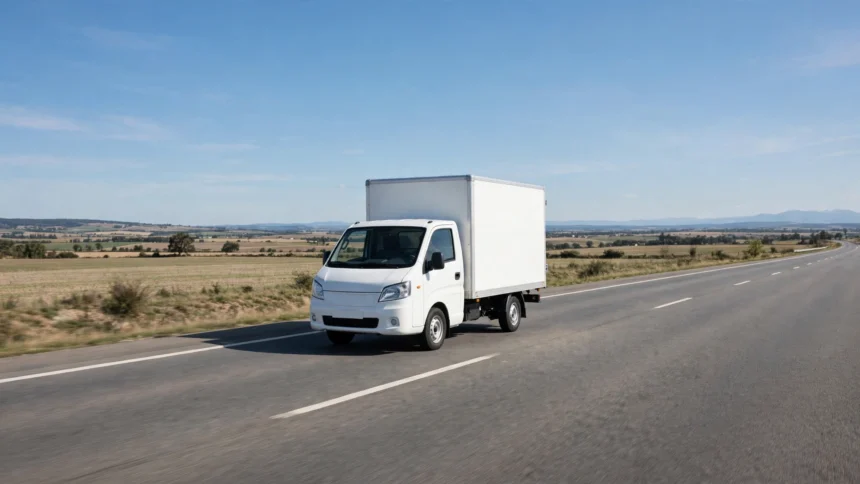
Every fleet owner knows the feeling. Your truck delivers a full load three hours away, the driver unloads, and then comes the long drive home with nothing in the back. The fuel burns the same. The driver gets paid the same. The tyres wear the same. But the truck earns nothing for half the journey.
- What Is a Backload?
- What an Empty Return Trip Actually Costs
- Fuel Burned for Nothing
- Driver Time You Still Pay For
- Wear, Tyres and Maintenance
- The Load You Could Not Take
- Why Small Fleets Run Empty So Often
- 4 Practical Ways to Find Return Loads Without a Big TMS
- 1. Build a Short List of Regular Return Partners
- 2. Use Freight Exchanges and Load Boards
- 3. Plan the Week Around Return Legs
- 4. Combine Part Loads on the Return Route
- When a Return Load Is NOT Worth Taking
- The Weekly Check: Two Numbers That Tell the Truth
- A Simple Worked Example
- Common Mistakes Small Fleets Make
- How to Start This Week
- Final Thoughts
- Frequently Asked Questions
That empty return trip is called running back empty, and the money it wastes is part of what operators describe as backload costs. Large transport companies obsess over these numbers. Small fleets often ignore them, not because the costs are small, but because nobody ever added them up. This guide adds them up, and then shows four practical ways to reduce them without buying expensive transport software.
What Is a Backload?
A backload is a paying load carried on the return leg of a journey. Your truck goes out loaded in one direction, and instead of coming back empty, it picks up someone else’s goods for the trip home. The return journey was happening anyway, so even a modestly priced backload is often worth more than it looks.
Backload costs are the opposite side of that coin. They are what the empty return trip costs you when no backload is found: the fuel, wages, wear and lost earning time spent moving an empty truck. Some operators call the empty distance “deadhead” mileage. Whatever name you use, the maths is the same, and it is unkind.
Think of it this way. If half your kilometres are empty, then every paying load has to carry the cost of two journeys while only charging for one. Your prices either rise and lose work, or stay low and quietly eat your profit. Neither option is a strategy. Finding return loads is.
What an Empty Return Trip Actually Costs
Most owners underestimate the empty trip because the costs arrive in different places. Fuel shows up at the pump. Wages show up at the end of the month. Wear shows up months later as a repair bill. Here is how to see them together.
Fuel Burned for Nothing
An empty truck uses slightly less fuel than a loaded one, but not much less. The engine still moves the vehicle’s own weight over the same distance, into the same wind, up the same hills. On a long return leg, fuel alone can take a painful share of what the outbound load paid.
Driver Time You Still Pay For
Your driver is paid for the return hours whether the truck is full or empty. Those hours also count toward legal driving limits, which means an empty return can consume the time that could have carried tomorrow’s first paying load. You are not just paying wages for nothing. You are spending a limited resource: legal, rested driving hours.
Wear, Tyres and Maintenance
Kilometres wear a truck, not loads. Brakes, tyres, suspension and engine hours all accumulate on the empty leg exactly as they do on the loaded one. Maintenance is usually calculated per kilometre for a reason. Every empty kilometre brings the next service, the next set of tyres and the next repair closer, without bringing any revenue with it.
The Load You Could Not Take
The least visible cost is opportunity. While your truck spends four hours returning empty, it cannot be anywhere else. A regular customer calls with a paying job and you have to refuse it, or delay it and look unreliable. Empty running does not just waste money. It shrinks the number of jobs your fleet can physically do each week.
Add those four together over a month, across even two or three trucks, and the “free” drive home is usually one of the biggest costs in the business. It just never appears as a single line in the accounts.
Why Small Fleets Run Empty So Often
It helps to understand why this happens, because it is rarely carelessness. Small fleets run empty for structural reasons.
Many small operators depend on one-way work: a manufacturer shipping out, a retailer receiving in, a builder needing materials on site. The customer pays for delivery, not for your journey home, so the return leg was never part of the deal. If you do not actively look for return work, empty is the default.
Planning is the second reason. In a small business the same person answers the phone, quotes the jobs and dispatches the trucks. Return loads require thinking a day ahead: where will each truck be tomorrow afternoon, and what might it carry back? When the day is busy, that thinking never happens, and the trucks simply come home.
The third reason is contacts. Big fleets have planners who know every warehouse and freight forwarder on their routes. A small fleet’s knowledge lives in the owner’s head and phone. The loads exist. The connection between the load and your empty truck is what is missing.
| You may also like: |
|---|
| How Transport Management Can Reduce Backload Costs |
| Supermaked: Complete Guide to the Future of Smart and Digital Grocery Shopping |
4 Practical Ways to Find Return Loads Without a Big TMS
You do not need a transport management system to fix this. You need a routine, a few relationships and the habit of asking one question before every outbound trip: what could this truck bring back?
1. Build a Short List of Regular Return Partners
Look at your three most common routes. At the far end of each one, list the businesses that ship goods back toward your base: wholesalers, manufacturers, agricultural suppliers, building merchants, furniture makers. Call them. Introduce your regular schedule and ask to be their first call when something needs to move your way.
This sounds old-fashioned because it is. A surprising amount of backload work is arranged through exactly these standing relationships. Businesses at the other end have the mirror-image problem: they pay full price for one-way deliveries because they know nobody passing. Your empty truck is their cheap solution, if they know it exists.
2. Use Freight Exchanges and Load Boards
Online freight exchanges exist precisely to match empty trucks with waiting loads. You post your vehicle’s location, capacity and return date, and shippers or forwarders offer loads. Rates on exchanges are usually lower than contract work, because everyone knows the truck is returning anyway. That is fine. A return load does not need to pay full price. It needs to beat the alternative, which is earning zero on that leg while still paying all the costs.
Check the load carefully before accepting: collection and delivery points, weight, whether it fits your vehicle, and whether the timing breaks your next day’s schedule. A cheap load that makes you miss tomorrow’s main job is not cheap.
3. Plan the Week Around Return Legs
Once a week, sit down with the coming jobs and map them: where does each truck finish each day? Then work the map backwards. A truck delivering north on Tuesday could collect a return load on Wednesday morning. Two half-days of empty running can sometimes be replaced by one planned pause and one loaded return.
This is the simple version of what bigger operators do with software when they work on reducing backload costs through transport management. The principle is identical at any size: treat the return leg as a product you sell, not as the journey home.
4. Combine Part Loads on the Return Route
A single full backload is ideal, but it is not the only option. Two or three part loads along the return route can add up to the same revenue. This is called groupage, and it suits small fleets well because your vehicle is smaller and your route knowledge is local. The trade-off is time: each collection adds a stop. Price that time honestly, and only combine loads that genuinely sit on or near your route home.
When a Return Load Is NOT Worth Taking
Enthusiasm for backloads has a failure mode: accepting any load at any price just to avoid running empty. Some return loads lose money more slowly than running empty, and a few lose it faster. Refuse a backload when the numbers or the timing say no.
Refuse it when the detour is long. A load that pulls you an hour off route each way adds fuel, wages and wear that can exceed a low rate. Refuse it when it risks your next committed job. Your regular customer’s work pays your bills and protects your reputation; a stranger’s cheap return load does not. Refuse it when the goods do not suit the vehicle or your insurance, however tempting the rate. And refuse it when the payment terms are poor. A load paid in 90 days by an unknown firm is not the same as a load paid in 14 days by a partner you trust.
A useful rule of thumb: the return load must cover the extra costs it creates (detour, loading time, any tolls or fees) and then contribute something toward the return leg’s fuel and wages. If it cannot do at least that, the empty road home is honestly the better deal.
The Weekly Check: Two Numbers That Tell the Truth
You do not need a dashboard. You need two numbers, checked once a week, written on the same page so you can watch them move.
Empty-Kilometre Percentage
Divide the kilometres driven empty by the total kilometres driven, and multiply by 100. If your trucks drove 4,000 km in a week and 1,400 of them were empty, your empty running is 35 percent. That single figure is the health score of your route planning. Every point you bring it down goes almost directly to profit, because the loaded revenue stays similar while the wasted cost falls.
Cost Per Loaded Kilometre
Add the week’s running costs — fuel, driver wages, and a fair share for maintenance and tyres — and divide by the loaded kilometres only. This number shows what each paying kilometre truly costs you. It is the number your quotes should be built on. Many owners discover their prices were built on total kilometres, which quietly assumes the empty legs are free. They are not, and this calculation proves it in your own figures.
Track both numbers for a month before changing anything, so you have an honest starting point. Then introduce one change at a time — a new return partner, an exchange membership, a weekly planning habit — and watch which change actually moves the numbers. Fleets that supply local shops often find the same pattern described in smart grocery retailing: regular, predictable routes are the easiest ones to fill in both directions.
| You may also like: |
|---|
| Purchase Order Automation: How It Improves Small Business Cash Flow |
| Humanilex Human Resources Management System: Features, Benefits and Pricing |
A Simple Worked Example
Here is an illustration with round numbers, not a measured case study. Imagine one truck that makes the same delivery run three times a week: 300 km out loaded, 300 km back. That is 900 empty kilometres a week, every week, before any other work is counted.
The owner lists the businesses near the delivery point and finds a wholesaler who regularly sends pallets back toward his town. The rate is modest, well below the outbound price, because the wholesaler knows the truck is returning anyway. But the truck was returning anyway too. Two of the three weekly returns are now loaded, and the third still runs empty while he keeps looking.
Nothing about the outbound work changed. Prices to his main customer stayed the same, and no new truck was bought. The only change is that 600 of those 900 weekly kilometres now earn money instead of only spending it. When he works out his cost per loaded kilometre at the end of the month, his quotes for new work get sharper, because he finally knows what a paying kilometre really costs him.
Common Mistakes Small Fleets Make
The first mistake is quoting outbound work without counting the return. If a job is one-way by nature, its price has to carry the empty leg, or a backload has to be part of the plan from the start. Winning work at a price that assumes a free journey home is winning a loss.
The second mistake is chasing return loads so hard that service suffers. Late collections, rushed drivers and missed main jobs cost more than any backload earns. The return load serves the main work, never the other way round.
The third mistake is leaving the knowledge with one person. If only the owner knows which wholesaler to call at the far end of each route, the system stops whenever the owner is away. Write the partner list down. Put it where the person dispatching can see it. The same discipline that helps with ordering — the logic behind purchase order automation for small business cash flow — applies here: a simple written process beats a brilliant memory.
How to Start This Week
On Monday, work out last week’s empty-kilometre percentage. It will probably be worse than you expected; that is normal, and it is your baseline. Pick your single most common route and list five businesses at the far end that ship goods in your direction. Call two of them before Friday. Post your return availability on one freight exchange for that route.
That is all. One route, five names, two calls, one listing. If it produces even one paying return trip, you have proof the system works, and proof is what makes the habit stick. Expand route by route, the same steady way you would fix any other leak in the business.
Final Thoughts
Backload costs are not a sign of a badly run fleet. They are the default outcome of one-way work, busy days and return legs nobody planned. The fleets that beat them are not the ones with the biggest software. They are the ones that ask, before every outbound trip, what the truck could bring back, and that check two simple numbers every week.
An empty truck earns nothing and still costs almost everything. Fill even part of that space, part of the time, and the maths of the whole business quietly improves.
Frequently Asked Questions
1. What exactly are backload costs?
Backload costs are the expenses of running a vehicle back empty after a delivery: fuel, driver wages, wear and maintenance, plus the paying work the vehicle could not do during those hours. They are the cost of the return journey when no paying backload is carried on it.
2. How do I calculate my empty-running percentage?
Add up the kilometres your vehicles travelled empty in a week and divide by the total kilometres travelled, then multiply by 100. Most small fleets are surprised by the result. Tracking it weekly shows whether your efforts to find return loads are actually working.
3. Are backload rates always lower than normal rates?
Usually, yes. Shippers know the vehicle is making the return journey anyway, so backloads are priced as a contribution toward that journey rather than as a full one-way delivery. A lower rate can still be good business, because the alternative on that leg is earning nothing at all.
4. Where can a small fleet find return loads?
Start with businesses at the far end of your regular routes that ship goods toward your base, and build standing arrangements with them. Freight exchanges and load boards are the second source. Regular, predictable routes are the easiest to fill because partners can plan around your schedule.
5. When should I refuse a return load?
Refuse it when the detour costs more than the rate covers, when it risks a committed job for a regular customer, when the goods do not suit your vehicle or insurance, or when the payment terms are risky. Running empty is sometimes the cheaper option, and knowing when is part of managing backload costs well.