


For transportation and logistics providers, empty return trips after making a delivery, known as “courier backloads,” are a persistent source of inefficiency and added cost. Vehicles traveling hundreds of miles without cargo still consume fuel, pay tolls, and require a driver – all expenses that eat directly into already thin margins.
Based on industry studies, empty backhauls are estimated to be about 36% of truck miles in the United States, which presents huge potential for savings. Unfortunately, it is not always practical to get rid of backhauls completely because of unbalanced distribution of cargo, special equipment needs, and short delivery time frames.
A Managed Approach to Reducing Backload Costs
Even though it might not be possible to get rid of empty return trips altogether in most cases of transportation, making use of a forward-looking approach that uses technology to manage backloads would certainly help to mitigate their effect in terms of costs.
Effective backload management is a data-intensive undertaking that requires real-time visibility into vehicle locations, available capacity, driver hours of service, and customer requirements across your entire operation. It also demands sophisticated matching algorithms and optimization models to pair outbound loads with available backload capacity efficiently.
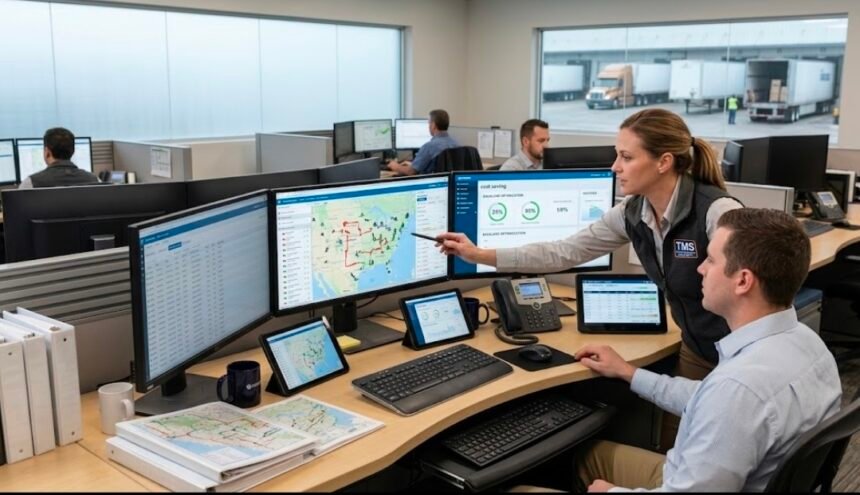
Transport management providers utilize advanced transportation management systems (TMS) to continuously monitor network balance and assets in motion to spot backload opportunities. They leverage vast databases of historical lane data, robust carrier networks, and real-time digital freight matching to source incremental loads that fit within existing schedules and equipment/driver availability.
Strategies for Backload Cost Reduction
Experienced 3PLs employ a range of strategies to minimize empty miles and generate incremental revenue, including:
Continuous Network Optimization
Powerful optimization models crunch terabytes of real-time and historical data to generate the most efficient routing scenarios based on network-wide transportation assets, constraints, and costs. By considering all delivery and pickup points and the various permutations for sequencing them, these tools identify opportunities to eliminate empty miles without violating service commitments.
Digital Freight Matching
Real-time digital freight marketplaces that match available loads with carrier capacity have revolutionized the spot market. API-based integration between the transport management provider’s TMS and digital freight brokerages enables instant access to a huge pool of potential backloads. Instead of dispatchers making dozens of calls to find a load, intelligent algorithms sift through thousands of available options to find the best matches.
Strategic Partnerships
Building mutually beneficial partnerships with shippers that have complementary freight flows is another effective backload cost reduction strategy. For example, a carrier that delivers auto parts to an assembly plant might partner with a nearby plastics manufacturer to haul their finished goods on the return trip. Transport management companies play a vital role in identifying and facilitating these strategic carrier-shipper pairings.
Flexible Cross-Docking
Sometimes the most efficient backload isn’t a direct return trip, but rather a series of shorter legs with freight consolidated at strategically located cross-docks. Having access to flexible cross-dock capacity and a TMS that can optimize multi-segment moves enables transport operators to creatively combine loads to eliminate empty miles and generate revenue.
Enabling Technologies
In addition to a robust TMS, other technologies that enable effective backload management include:
- Real-time shipment visibility solutions
- Advanced dock scheduling and yard management tools
- Onboard telematics for monitoring driver hours and equipment readiness
- Mobile apps for load status tracking and digital documentation
- API-based integrations with carrier networks, freight marketplaces, and shipper systems
The Business Benefits
For transportation providers, the business case for proactive backload management is clear and compelling. Eliminating empty miles reduces fuel, labor, and asset costs while generating incremental revenue that drops directly to the bottom line. Optimizing asset utilization also allows carriers to haul more total freight without adding trucks and drivers, enabling growth without a linear increase in costs.
Shippers benefit from reduced transportation costs, more flexible capacity, and end-to-end shipment visibility. They can also tout the environmental benefits of squeezing waste out of the supply chain to support sustainability goals.
Getting Started
If you’re a transport operator looking to put a big dent in backload costs, partnering with an experienced transport management company is a great place to start. Even a modest 5-10% reduction in empty miles can make a huge impact on profitability in an industry where the average operating margin hovers around 5%.
Effective backload management powered by the right 3PL partner and technology is one of the most impactful strategies for driving out transportation costs in an inflationary environment where most other expenses are on the rise.